

site search
online catalog
Search Results
Showing results 2041 to 2060 out of 3413 for
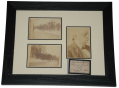
PHOTOS FROM GENERAL BEN BUTLER’S FUNERAL 1893
This group consists of two original period photographs of Gen. Ben Butler’s funeral cortege, taken on the spot, framed with a bust portrait of the general himself and a period display card in old… (490-6216) Learn More »
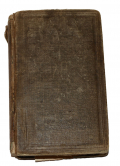
“TREATISE ON FIELD FORTIFICATION” BOOK IDENTIFIED TO COLONEL OF 2ND RHODE ISLAND INFANTRY
Title page reads, “A TREATISE ON FIELD FORTIFICATION, CONTAINING INSTRUCTIONS ON THE METHODS OF LAYING OUT, CONSTRUCTING, DEFENDING, AND ATTACKING INTRENCHMENTS, WITH THE GENERAL OUTLINES ALSO OF… (1179-719) Learn More »
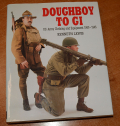
SIGNED AND NUMBERED COPY OF 1993 REFERENCE BOOK “DOUGHBOY TO GI”
The full title of the work is “DOUGHBOY TO GI: US ARMY CLOTHING AND EQUIPMENT 1900-1945” by Kenneth Lewis and published by Norman D. Landing Publishing, West Midlands, England in 1993. Book is… (1235-519) Learn More »
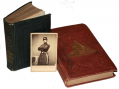
INSCRIBED “US INFANTRY AND RIFLE TACTICS” AND INSCRIBED VIELE’S “HANDBOOK FOR ACTIVE SERVICE,” WITH DYNAMIC CDV, OF ADJUTANT LEWIS PARMELEE, BERDAN’S 2nd US SHARPSHOOTERS, KIA ANTIETAM!
Lewis Clark Parmelee was born in 1839, the son of a wealthy New Haven, CT, businessman. The history of Berdan’s sharpshooters noted, “Adj. Parmelee was a great favorite in the regiment, a young… (2024-333) Learn More »
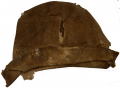
INDIAN WAR FIELD-USED CAMPAIGN HAT FROM FORT PEMBINA, NORTH DAKOTA
This is a real field-used Indian War campaign hat in relic condition excavated at Fort Pembina, ND, a small frontier army post in operation from 1870 to 1895. Anaerobic conditions of the dig have… (1052-253) Learn More »
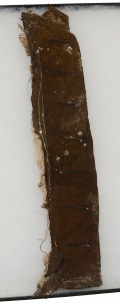
US ARMY DRESS COAT LAPEL FROM FORT PEMBINA, ND
This coat lapel comes from the left side of US army dress coat discarded by a soldier at Fort Pembina, ND, and was excavated in wet, anaerobic soil that has preserved leather and cloth in remarkable… (1052-589) Learn More »
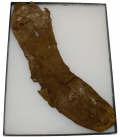
SOLDIER’S SOCK FROM FORT PEMBINA, ND
This comes from the excavations at Fort Pembina, ND, and appears to be the 1877 pattern army sock, which was medium gray in color, had white toes, and the weave of the heel running parallel with the… (1052-582) Learn More »
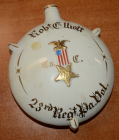
G.A.R. UNION VETERAN’S CANTEEN OF ROBERT ELLIOTT 23RD PENNSYLVANIA
The canteen had great significance for the G.A.R. in symbolizing service (as an essential piece of army gear,) comradery and, later, reconciliation, as the slogan “we drank from the same canteen”… (480-334) Learn More »
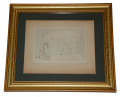
FRAMED ETCHING: “BUTLER’S VICTIMS OF FORT ST. PHILIP” BY ADELBART VOLCK- “CONFEDERATE WAR ETCHINGS”
This is a framed etching by Adelbart Volck, from his “Confederate War Etchings,” originally published in 1863, and has a notation at bottom of the page mount: “Butler at New Orleans,” though… (490-6205) Learn More »
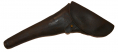
VERY NICE CONDITION EARLY CIVIL WAR U.S. CAVALRY HOLSTER
This is a very good condition early-war holster for a .36 caliber revolver with full military flap, wide belt loop secured by stitching and three rivets, toe plug, and sewn latch tab. The stitching is… (286-1332) Learn More »
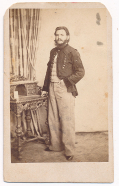
FULL STANDING VIEW OF A UNION SAILOR WITH CARPENTER’S MATE INSIGNIA
CDV is of a bearded sailor posed with one hand in his pocket and the other leaning on a writing table. The subject wears a dark double-breasted short jacket with a bibbed collar, light trousers and… (160-563) Learn More »
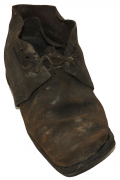
SCARCE CIVIL WAR ARMY ISSUE SHOE MADE AND MARKED BY CIVIL WAR CONTRACTOR JOHN MUNDELL OF PHILADELPHIA
This is a typical, though very scarce, Civil War issue army shoe made by a known contractor and marked by him on the inside of the ankle: “J. MUNDELL.” Mundell was born in Ireland in 1829, reached… (1052-298) Learn More »
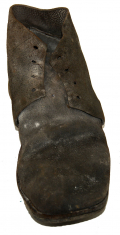
SCARCE CIVIL WAR ARMY ISSUE SHOE, A.K.A. BROGAN OR BOOTTEE
This Civil War US army issue shoe is typical wartime construction, using rough-side out black leather with reinforcing heel piece or “counter” sewn inside, four pairs of holes for a leather lace… (1052-285) Learn More »
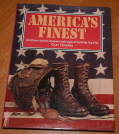
WORLD WAR TWO AMERICAN PARATROOPER REFERENCE BOOK
The full title is “AMERICA’S FINEST: US AIRBORNE UNIFORMS, EQUIPMENT AND INSIGNIA OF WORLD WAR TWO (ETO)” by Gary Howard, published by Stackpole Books of Mechanicsburg, Pennsylvania in… (1235-520A) Learn More »
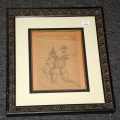
MAJOR GENERAL BENJAMIN F. BUTLER—PENCIL SKETCH CARTOON
On yellowing paper, measuring 6.5” x 9.25. Mounted on heavy card, w/gilt trim, matted in black and cream, in heavy black wooden frame, ornately trimmed. W/white card backing, fastened with gray… (490-6354) Learn More »
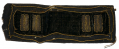
SINGLE SHOULDER STRAP FOR A CAPTAIN OF STAFF
Strap is made of dark blue cloth with a double row of dead bullion for a border. The rank field is of black velvet while the rank of captain is made of bars of heavy gold bullion thread. The underside… (460-1468) Learn More »

RARE SOCKET BAYONET FOR THE “DRAKE-ALTERATION” THE M1841 MISSISSIPPI RIFLE
The State of Massachusetts contracted with the firm of A.J. Drake of Boston to alter 1,742 Model 1841 Mississippi Rifles that were in state stores. The guns were unaltered in caliber (retaining… (490-6787) Learn More »
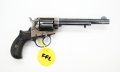
COLT MODEL 1877 DOUBLE ACTION .38 CAL. LONG BARREL LIGHTNING REVOLVER
Lots of original blue and some case colors with immaculate checkered hard rubber grips with the rampant colt at top on either side, about excellent condition. Long barrel version with ejector. Barrel… (490-5575) Learn More »
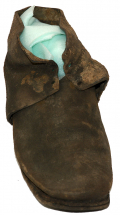
SCARCE CIVIL WAR ARMY ISSUE SHOE, A.K.A. BROGAN OR BOOTTEE
This Civil War US army issue shoe is typical wartime construction, using rough-side out black leather with reinforcing heel piece or “counter” sewn inside, four pairs of holes for a leather lace… (1052-300) Learn More »
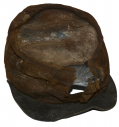
REGULAR ARMY CIVIL WAR ENLISTED KEPI WITH INDIAN WAR USE FROM FORT PEMBINA, NORTH DAKOTA
This Civil War enlisted man’s kepi comes from excavations at Fort Pembina, ND, conducted on private property with the owner’s permission. The fort was established in 1870 by troops of the 20th US… (1052-250) Learn More »
Showing 2041 to 2060 out of 3413
- Prev
- 1
- 2
- 3
- 4
- 5
- 6
- 7
- 8
- 9
- 10
- 11
- 12
- 13
- 14
- 15
- 16
- 17
- 18
- 19
- 20
- 21
- 22
- 23
- 24
- 25
- 26
- 27
- 28
- 29
- 30
- 31
- 32
- 33
- 34
- 35
- 36
- 37
- 38
- 39
- 40
- 41
- 42
- 43
- 44
- 45
- 46
- 47
- 48
- 49
- 50
- 51
- 52
- 53
- 54
- 55
- 56
- 57
- 58
- 59
- 60
- 61
- 62
- 63
- 64
- 65
- 66
- 67
- 68
- 69
- 70
- 71
- 72
- 73
- 74
- 75
- 76
- 77
- 78
- 79
- 80
- 81
- 82
- 83
- 84
- 85
- 86
- 87
- 88
- 89
- 90
- 91
- 92
- 93
- 94
- 95
- 96
- 97
- 98
- 99
- 100
- 101
- 102
- 103
- 104
- 105
- 106
- 107
- 108
- 109
- 110
- 111
- 112
- 113
- 114
- 115
- 116
- 117
- 118
- 119
- 120
- 121
- 122
- 123
- 124
- 125
- 126
- 127
- 128
- 129
- 130
- 131
- 132
- 133
- 134
- 135
- 136
- 137
- 138
- 139
- 140
- 141
- 142
- 143
- 144
- 145
- 146
- 147
- 148
- 149
- 150
- 151
- 152
- 153
- 154
- 155
- 156
- 157
- 158
- 159
- 160
- 161
- 162
- 163
- 164
- 165
- 166
- 167
- 168
- 169
- 170
- 171
- Next
Most Popular
Historical Firearms Stolen From The National Civil War Museum In Harrisburg, Pa »
Theft From Gravesite Of Gen. John Reynolds »
Selection Of Unframed Prints By Don Troiani »
Fine Condition Brass Infantry Bugle Insignia »
featured item
SIXTH PLATE TINTYPE - MOUNTED US CAVALRY TROOPER HOLDING COLT DRAGOON REVOLVER
A 2 ¾ inch by 3 ¼ inch lightly tinted1/6 plate tintype of a mounted US cavalry trooper. He is riding a dark colored mare and seated on a McClellan saddle with saddle bags at the rear. The best part is the trooper is proudly displaying a drawn Colt… (534-42). Learn More »
site search