


site search
online catalog
Canteens
Showing 21 to 34 out of 34
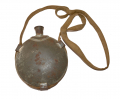
PRE-CIVIL WAR MILITIA CANTEEN WITH STRAP
This smaller canteen matches pre-Civil War varieties in size and construction, holding a modest amount of water for occasional drill and light duties. All soldering remains strong, while the tin body… (2025-2039). Learn More »
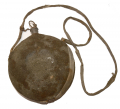
M1858 CANTEEN WITH COVER, SLING, & STOPPER FROM G.A.R. POST 551, YORK SPRINGS
This is a terrific old battlefield “pick-up” or “barn find” Civil War canteen. It is the M1858 “smooth side” canteen with pewter spout and three shoulder strap brackets. It is completely… (1202-866). Learn More »
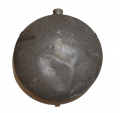
CONFEDERATE TIN DRUM CANTEEN
This piece closely matches examples of Confederate canteens from each theater of the Civil War. Simple in material and construction, the body of this tin canteen is comprised of two slightly concaved… (2024-2106). Learn More »
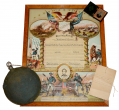
WILLIAM J. HAND 3rd PA RESERVES: GREAT BROWN INK TAGGED CANTEEN, G.A.R. SOLDIER’S MEMORIAL, CASED PHOTO IN UNIFORM, BEAUTIFUL ENAMELED GAR WATCH FOB WITH CHAIN: TWICE WIA AND POW
This identified grouping displays very strongly. It includes the soldier’s framed, multi-color veteran’s memorial with G.A.R. themes, filled out with his service details and presented to his wife… (766-2049). Learn More »
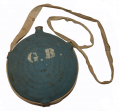
VERY NICE LIGHT BLUE CANTEEN WITH STENCILLED SOLDIER’S WHITE INITIALS- THE ONE IN THE BOOK!
Once in the esteemed collection of John Henry Kurtz, this M1857 US army “bullseye” or corrugated canteen is pictured and discussed on page 135 (as Canteen 149) in O’Donnell’s U.S. Army &… (1202-217). Learn More »
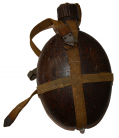
WWII GERMAN TROPICAL CANTEEN
Canteen is the wood covered aluminum and is marked on the back side. It has a bakelight cap and web carry strap. They both show a good bit of wear; the cup is missing. It looks like the soldier’s… (1235-339). Learn More »
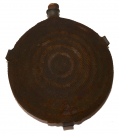
MODEL 1858 BULLSEYE CANTEEN WITH COVER
Original Civil War Model 1858 corrugated-pattern tin canteen, often called the “Bullseye” pattern. The body consists of two circular sections of pressed-tin soldered together at the rim. The… (1254-137). Learn More »
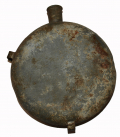
CONFEDERATE “PIE-PLATE” TIN DRUM CANTEEN
This is an interesting variation on the tin drum canteens that became very popular in the 1850s following the adoption of round drum-shaped tin canteen with convex sides by the US Army in 1836, though… (490-6762). Learn More »
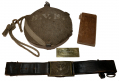
OFFICER AND SERGEANT’S GROUP OF EFFINGHAM VANDERBURGH, 56th NY – “TENTH LEGION” – AND 1st NEW YORK ENGINEERS
This group consists of four pieces belonging to an early-war Lieutenant in the 56th New York Volunteers who re-enlisted later to serve as an enlisted man in the 1st New York Engineers. The group… (2024-354). Learn More »
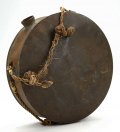
CONFEDERATE / MILITIA STYLE TIN DRUM CANTEEN
For details on this and similar patterns see O’Donnell, Canteens, Chapter 2 in particular. This is a simply made canteen using tinned sheet iron and was popular in prewar militia units, imitating… (2024-693). Learn More »
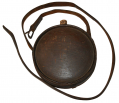
CLASSIC CONFEDERATE WOOD DRUM CANTEEN, INSCRIBED, WITH SLING
This is a great example of the classic Civil War Confederate wood drum canteen. These used simple lathe-turned front and back faces with staves curved to fit round them and grooved to hold them in… (1179-622). Learn More »
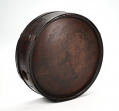
CONFEDERATE WOOD DRUM CANTEEN
This is the classic Civil War Confederate wood canteen made with simple lathe-turned front and back faces under curved and grooved staves secured with narrow iron hoops that are in turn kept in place… (490-4172). Learn More »
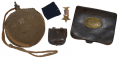
IDENTIFIED GROUPING OF ARTIFACTS BELONGING TO PRIVATE JABEZ B. OLES 144th NY INFANTRY AND 1st NY ENGINEERS
This grouping comes from a respected central New York collection with an identification that is verbal, but trustworthy and includes the soldier’s regulation issue canteen with his initials… (480-178). Learn More »
$2,025.00
Originally $2,250.00
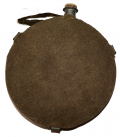
U.S. M1858 NEW YORK DEPOT CANTEEN WITH ORIGINAL COVER
This is a very good example of the US Model 1858 canteen as supplied by makers to the NY Depot, a branch of the U.S. Quartermaster’s Office of Clothing and Equipage. A distinguishing feature of… (490-2886). Learn More »
Showing 21 to 34 out of 34
Most Popular
Historical Firearms Stolen From The National Civil War Museum In Harrisburg, Pa »
Theft From Gravesite Of Gen. John Reynolds »
Selection Of Unframed Prints By Don Troiani »
Fine Condition Brass Infantry Bugle Insignia »
Rare Identified 65Th Ny Sergeant’s Jacket, With Manscript Material: 1St U.s. Chasseurs »
featured item
FRENCH IMPORT UNIFORM GROUPING INCLUDING EXTENSIVE DIARY ARCHIVE (1861-1863) IDENTIFIED TO A MEMBER OF THE 62ND PENNSYLVANIA VOLUNTEER INFANTRY – SGT. ROBERT M. MARTIN
Presented here is a most extraordinary and identified Civil War grouping that consists of an original Federal uniform, wartime letters and journal that were brought home after the war by Robert Newton Martin. Included in this Civil War multi-item… (1179-259). Learn More »
site search