

site search
online catalog
Relics
Showing 101 to 150 out of 321
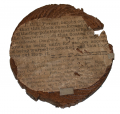
SLICE OF CONFEDERATE FLAG POLE FROM RICHMOND
Here is a 3/8” thick slice of wood that measures 4 ¼” in diameter. Glued to one side is the remains of an old, printed label: “Richmond, Va., May 20, 1890. I, C.L. Parker, hereby cer[tify] that… (1030-324). Learn More »
$625.00
Originally $780.00

KEPI CHINSTRAP AND SIDE BUTTONS FROM AN INDIAN WAR FRONTIER
This is a complete leather chinstrap from an army kepi or forage cap from excavations at Fort Pembina, ND. The chinstrap is a two-piece style with a fixed loop on the end of one strap and a fixed… (1052-486). Learn More »
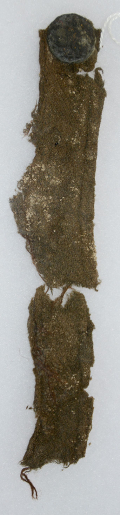
CIVIL WAR-INDIAN WAR UNIFORM COAT PIECE WITH BUTTON FROM FORT PEMBINA
This is part of the right lapel of a US army coat discarded by a soldier at Fort Pembina, ND, sometime between 1870 and 1895, and is from excavations in wet, anaerobic soil that has preserved leather… (1052-724). Learn More »
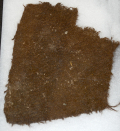
PIECE OF US ARMY BLANKET FROM FORT PEMBINA, NORTH DAKOTA
This piece of a US Army military issue blanket comes from excavations at Fort Pembina, ND, conducted on private property with the owner’s permission, a fort established in 1870 by troops of the 20th… (1052-616). Learn More »
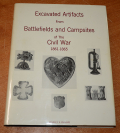
“EXCAVATED ARTIFACTS” BY STANLEY PHILLIPS
Full title of this hardcover volume is “EXCAVATED ARTIFACTS FROM BATTLEFIELDS AND CAMPSITES OF THE CIVIL WAR 1861-1865” by Stanley S. Phillips. Volume measures 8.5” x 11” and runs 220 pages… (1266-1053). Learn More »
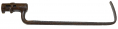
EXCAVATED MODEL 1855 SOCKET BAYONET MADE INTO POT HOOK
This is a M-1855 socket bayonet in very good, “dug” condition. Bayonet has been cleaned and coated and the iron is in very stable condition. The tip has been broken off and the next 2 ½”… (1000-1380). Learn More »
$360.00
Originally $450.00
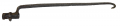
RARE CONFEDERATE “THREE SQUARE” SOCKET BAYONET MADE INTO POT HOOK
This is an excavated example of a Confederate-made musket socket bayonet. Measuring approximately 21” overall with a 2 ¾” socket. This was made for an early .69 caliber musket with a bayonet… (1000-1374). Learn More »
$715.00
Originally $895.00
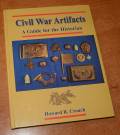
BOOK – CIVIL WAR ARTIFACTS, A GUIDE FOR THE HISTORIAN BY CROUCH
A classic “relic book” by Howard R. Crouch. Printed hardcover, 8.5” x 11”, 238 pages. Very good condition from the library of William Turner. The pages are filled with photographs of great… (1266-1086). Learn More »
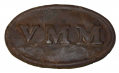
EXCAVATED CIVIL WAR “VMM” OVAL WAIST BELT PLATE
Presented here is an excavated “Volunteer Militia of Maine” oval waist belt plate that was issued to the State’s volunteer infantrymen early in the Civil War. Maine formally organized its… (1000-1541). Learn More »
$1,480.00
Originally $1,850.00
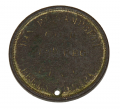
DUG CIVIL WAR ID DISK FOR 12TH PENNSYLVANIA RESERVES (41st PENNSYLVANIA) SOLDIER
Front of the tag has a bust of General McClellan surrounded by “MAJOR GENERAL GEO. B. MCCLELLAN / WAR OF 1861.” Face is dark with gilt remaining in the low areas. Reverse is stamped “DANIEL… (1000-1836). Learn More »
$1,800.00
Originally $2,250.00
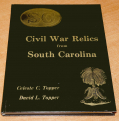
BOOK – CIVIL WAR RELICS FROM SOUTH CAROLINA
Limited Edition, Numbered and Signed. Hardcover by Celeste and David Topper. Black covers with title on front cover and spine, 8.5” x 11”, 201 pages, inscribed to William Turner. Number 123 of… (1266-1058). Learn More »
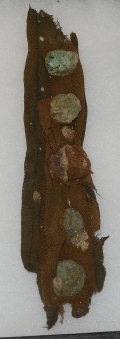
PIECE OF AN INDIAN WAR M1872 FATIGUE BLOUSE OR DRESS COAT FROM FORT PEMBINA, ND
This is a piece from the lapel of a US Army jacket showing part of the blue outer fabric, the lining and the remains of five corroded brass buttons. From the size and spacing of the buttons this is… (1052-608). Learn More »
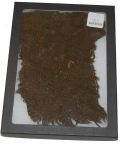
PIECE OF CIVIL WAR ARMY BLANKET FROM FORT PEMBINA, NORTH DAKOTA
The army had vast stocks of Civil War material left over at the end of the war. These supplies, along with the reduction of the postwar army meant U.S. troops were getting Civil War gear well into the… (1052-617). Learn More »
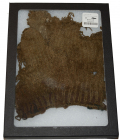
SCARCE INDIAN WAR SOLDIER’S MITTEN FROM FORT PEMBINA, ND
This comes from the excavations at Fort Pembina, occupied 1870-1895, where cold weather in winter months might well be a concern. The army began issuing mittens in 1873. Before that men were left to… (1052-620). Learn More »
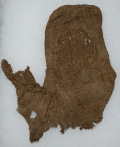
INDIAN WAR SOLDIER’S MITTEN FROM FORT PEMBINA, ND
This comes from the excavations at Fort Pembina, occupied 1870-1895, where cold weather in winter months might well be a concern. The army began issuing mittens in 1873. Before that men were left to… (1052-619). Learn More »

SPRINGFIELD 1838 DATED M1816 PERCUSSION CONVERSION MUSKET FROM THE YORK SPRINGS, PA., G.A.R. POST, WITH MILITARY RACK MARKINGS
A good example of a classic early Civil War musket: a Model 1816 converted from flintlock to percussion in the early 1850s to bring it up to par with the new, percussion M1842 muskets. These are .69… (1202-429). Learn More »
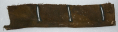
CIVIL WAR-INDIAN WAR UNIFORM LAPEL FROM FORT PEMBINA
This strip of cloth showing three buttonholes (and what seems to be part of a fourth) is the remnant of an army dress coat discarded after its useful days were done at Fort Pembina, a small frontier… (1052-610). Learn More »
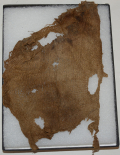
INDIAN WAR SOLDIER’S MITTEN PIECE FROM FORT PEMBINA, ND
This comes from the excavations at Fort Pembina, occupied 1870-1895, where cold weather in winter months might well be a concern. The army began issuing mittens in 1873. Before that men were left to… (1052-621). Learn More »
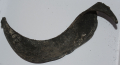
CIVIL WAR-INDIAN WAR FORAGE CAP VISOR
This is a well preserved leather visor from a forage cap recovered at Fort Pembina, ND, where it was preserved in remarkable condition by wet, anaerobic soil conditions. This is typical of the simple… (1052-485). Learn More »
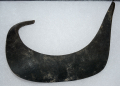
CIVIL WAR-INDIAN WAR FORAGE CAP VISOR
This is a well preserved leather visor from a forage cap recovered at Fort Pembina, ND, where it was preserved in remarkable condition by wet, anaerobic soil conditions. This is typical of the simple… (1052-482). Learn More »
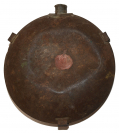
RELIC US CIVIL WAR CANTEEN: FROM YORK SPRINGS, PA, GAR POST #9
This regulation, smooth-sided canteen came from the York Springs G.A.R. post, is pretty clearly an early battlefield pick-up, and may well have a Gettysburg origin. It is untagged, however, with the… (2023-2674). Learn More »
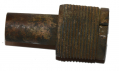
RELIC -- US NAVAL WATERCAP FUSE WITH BUSHING, DATED 1864
Excavated naval watercap fuse dated 1864 and in good condition. This fuse is made of brass with flange on top, with threaded portion and tapered body. A brass bushing is on this fuse to fit into… (2024-2327). Learn More »

EXCAVATED CONFEDERATE CAVALRY SABER
If they gave out awards for crudely made cavalry sabers, this one would be in the running. The guard is simple flat iron, curving in a broad semicircle, with a simple hole in one end through which the… (490-6746). Learn More »

SPEARHEAD FROM A BROKEN LANCE
This is the spearhead section only from a broken lance. The piece meas. approx. 38.50 inches long overall. The iron point of the spearhead itself is double edged with a raised ridge on each side… (490-3235). Learn More »
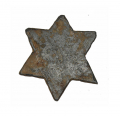
RELIC, HAND-MADE UNION 8TH ARMY CORPS BADGE
Six-pointed star carved from a flat piece of white metal, likely pewter. In fine, “dug” condition with light oxidation on points and edges. Measures approximately 1.25” across points. Unknown… (490-6757). Learn More »

EXCAVATED CIVIL WAR US MODEL 1840 MUSICIAN’S SWORD
This pattern of sword for wear by musicians was part of the 1840 series of arms that included new patterns of cavalry saber, officer’s sword, non-commissioned officer’s sword, etc. This is similar… (490-6745). Learn More »
BUTTONS RECOVERED FROM BATTLE OF WÖRTH, 1870 – 45th, 48th & 56th FRENCH REGIMENTAL
The Battle of Wörth, also known as the Battle of Reichshoffen or as the Battle of Frœschwiller, refers to the second battle of Wörth, which took place on 6 August 1870 in the opening stages of… (1202-). Learn More »
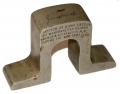
RAIL SECTION FROM THE MANASSAS GAP BRANCH, ORANGE & ALEXANDRIA RAILROAD
This is a nicely labeled section of rail stamped in small letters: “Section of U. rail used on the Manassas Gap branch Orange & Alexandria R.R. during the war 1861-65” and signed on the top… (1202-186). Learn More »
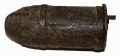
CONFEDERATE 3” MULLANE COMMON SHELL
Here is a fired Confederate 3” bourreleted Mullane Type 1 common shell recovered from an unknown battlefield location. Made for the 3” Ordnance Rifle. Also known as a “Tennessee Sabot”, this… (490-7005). Learn More »
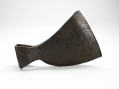
ANTIQUE BROAD AXE HEAD FROM FREDERICKSBURG
The Fredericksburg area was filled with army camps on both sides of the river and tools like this were needed for the construction of winter huts as well as cutting trees for firewood and field works.… (2023-3257). Learn More »

EXCAVATED CIVIL WAR BRITISH IMPORT SWORD BAYONET FOR THE ENFIELD SHORT RIFLE
This is a good, excavated example of the British sword bayonet for the short rifle, imported by both sides in the Civil War. The blade has no bends or breaks and is missing just a small bit of the tip… (1179-1237). Learn More »
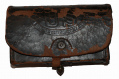
US CAVALRY MANN’S PATENT CARTRIDGE BOX EX-LEES HQ MUSEUM
The Mary Thompson house at Gettysburg, used by Lee as his headquarters at Gettysburg, was recognized by its owner in the 1890s as a valuable battlefield relic, perhaps a particular attraction for… (224-750). Learn More »
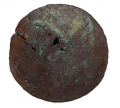
US GENERAL SERVICE EAGLE COAT BUTTON RECOVERED AT 3RD CORPS HOSPITAL SITE, GETTYSBURG – KEN BREAM COLLECTION
Dark chocolate patina; has some damage to face – a crack and a few small holes. Some verdigris present. Shank present; more verdigris on reverse. There appears to be a backmark present but it is no… (1163-198A). Learn More »
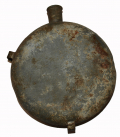
CONFEDERATE “PIE-PLATE” TIN DRUM CANTEEN
This is an interesting variation on the tin drum canteens that became very popular in the 1850s following the adoption of round drum-shaped tin canteen with convex sides by the US Army in 1836, though… (490-6762). Learn More »
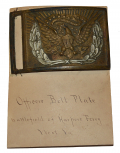
MODEL 1851 SWORD BELT PLATE FROM HARPERS FERRY ON A GREAT DISPLAY CARD
This sword belt plate, a very good example of an early pick-up, is mounted on a great old card typical of early relic displays labeled in brown ink, “Officers Belt Plate / battlefield of Harpers… (1202-196). Learn More »
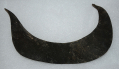
CIVIL WAR-INDIAN WAR FORAGE CAP VISOR
This is a well preserved leather visor from a forage cap recovered at Fort Pembina, ND, where it was preserved in remarkable condition by wet, anaerobic soil conditions. This is typical of the simple… (1052-480). Learn More »
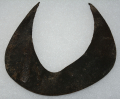
CIVIL WAR-INDIAN WAR FORAGE CAP VISOR
This is a well preserved leather visor from a forage cap recovered at Fort Pembina, ND, where it was preserved in remarkable condition by wet, anaerobic soil conditions. This is typical of the simple… (1052-483). Learn More »
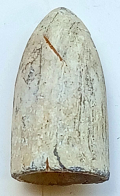
.69 CALIBER "NO-RING PRUSSIAN" BULLET
This was for the .69 caliber rifled muskets being used in the Federal service. These were machine "pressed and turned" bullets made at a Federal arsenal. This particular style features no grooves,… (2024-919). Learn More »
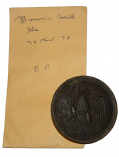
RELIC U.S. ENLISTEDMAN’S EAGLE BREAST PLATE FROM BROWN’S MILL, GEORGIA, RECOVERED BY SID KIRKSIS
This excavated Pattern 1839 US cartridge box shoulder sling plate (Eagle breast plate) has a smooth brown patina. The brass face features an eagle clutching arrows and an olive branch. The plate’s… (490-6828). Learn More »
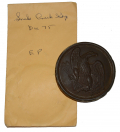
RELIC U.S. ENLISTEDMAN’S EAGLE BREAST PLATE FROM SNAKE CREEK GAP, RECOVERED BY SID KIRKSIS
This excavated Pattern 1839 US cartridge box plate has a smooth brown patina on the face. The oval brass face features a raised “US”. The plate’s reverse has 99% of the lead fill. The two iron… (490-6829). Learn More »
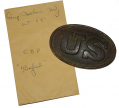
RELIC U.S. ENLISTEDMAN’S CARTRIDGE BOX PLATE MARKED “E. GAYLORD” FROM KENTUCKY, RECOVERED BY SYD KIRKSIS
This excavated Pattern 1839 US cartridge box plate has a smooth brown patina on the face. The oval brass face features a raised “US”. The plate’s reverse has 99% of the lead fill. The two iron… (490-6831). Learn More »
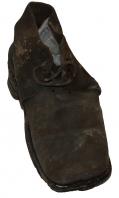
SCARCE CIVIL WAR ARMY ISSUE SHOE, A.K.A. BROGAN OR BOOTTEE
This Civil War US army issue shoe is typical wartime construction, using rough-side out black leather with reinforcing heel piece or “counter” sewn inside, four pairs of holes for a leather lace,… (1052-282). Learn More »
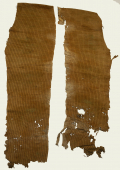
KNIT DRAWERS OR TROUSERS FROM FORT PEMBINA
These pieces are two legs from trousers or, more likely, drawers recovered in the excavations at Fort Pembina, ND, conducted on private property with the owner’s permission, where wet, anaerobic… (1052-446). Learn More »
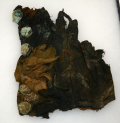
CIVIL WAR-INDIAN WAR UNIFORM COAT PIECE WITH BUTTONS FROM FORT PEMBINA
This comes from the right lapel of a US army coat discarded by a soldier at Fort Pembina, ND, sometime between 1870 and 1895, and is from excavations in wet, anaerobic soil that has preserved leather… (1052-580). Learn More »
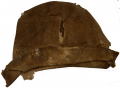
INDIAN WAR FIELD-USED CAMPAIGN HAT FROM FORT PEMBINA, NORTH DAKOTA
This is a real field-used Indian War campaign hat in relic condition excavated at Fort Pembina, ND, a small frontier army post in operation from 1870 to 1895. Anaerobic conditions of the dig have… (1052-253). Learn More »
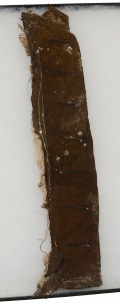
US ARMY DRESS COAT LAPEL FROM FORT PEMBINA, ND
This coat lapel comes from the left side of US army dress coat discarded by a soldier at Fort Pembina, ND, and was excavated in wet, anaerobic soil that has preserved leather and cloth in remarkable… (1052-589). Learn More »
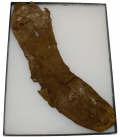
SOLDIER’S SOCK FROM FORT PEMBINA, ND
This comes from the excavations at Fort Pembina, ND, and appears to be the 1877 pattern army sock, which was medium gray in color, had white toes, and the weave of the heel running parallel with the… (1052-582). Learn More »
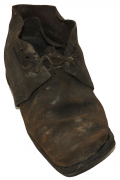
SCARCE CIVIL WAR ARMY ISSUE SHOE MADE AND MARKED BY CIVIL WAR CONTRACTOR JOHN MUNDELL OF PHILADELPHIA
This is a typical, though very scarce, Civil War issue army shoe made by a known contractor and marked by him on the inside of the ankle: “J. MUNDELL.” Mundell was born in Ireland in 1829, reached… (1052-298). Learn More »
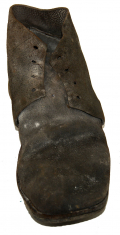
SCARCE CIVIL WAR ARMY ISSUE SHOE, A.K.A. BROGAN OR BOOTTEE
This Civil War US army issue shoe is typical wartime construction, using rough-side out black leather with reinforcing heel piece or “counter” sewn inside, four pairs of holes for a leather lace… (1052-285). Learn More »
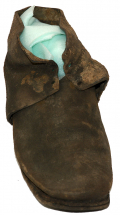
SCARCE CIVIL WAR ARMY ISSUE SHOE, A.K.A. BROGAN OR BOOTTEE
This Civil War US army issue shoe is typical wartime construction, using rough-side out black leather with reinforcing heel piece or “counter” sewn inside, four pairs of holes for a leather lace… (1052-300). Learn More »
Showing 101 to 150 out of 321
Most Popular
Historical Firearms Stolen From The National Civil War Museum In Harrisburg, Pa »
Theft From Gravesite Of Gen. John Reynolds »
Selection Of Unframed Prints By Don Troiani »
Fine Condition Brass Infantry Bugle Insignia »
featured item
CAPTURED CONFEDERATE SECOND NATIONAL FLAG, UNUSUAL VARIATION WITH MADAUS LETTER, FROM A SOLDIER IN THE 59th NEW YORK
This 2nd National Confederate Flag was purchased in the 1980s by a well-respected Florida dealer/collector directly from descendants of the Union soldier who had kept it as a trophy. It comes with a 1988 letter on Milwaukee Public Museum letterhead… (1179-019). Learn More »
site search