

site search
online catalog
Relics
Showing 81 to 100 out of 321
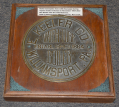
MAKER’S PLATE FROM THE BOILER OF THE USS KEARSARGE, EX-FRANCIS BANNERMAN
An impressive brass boiler maker’s name plate from the steam boiler of the USS Kearsarge. Nicely mounted on a wood plaque and reading “E. KEELER CO. /WILLIAMSPORT. PA. / WATER TUBE BOILER /… (2025-1179). Learn More »
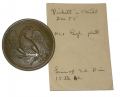
U.S. M1826 SHOULDER BELT PLATE RECOVERED BY SYD KERKSIS IN DECEMBER 1955 IN THE LINES OF THE 2nd DIVISION 15th CORPS AT PICKETT’S MILL: ATLANTA CAMPAIGN
This plate comes with its original collection envelope with notations on its provenance by Syd Kerksis, noted early collector and author. Pickett’s Mill was fought on May 27, 1864, in the Atlanta… (2025-785). Learn More »
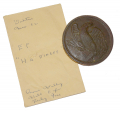
DINGEE MARKED ROUND EAGLE CARTRIDGE BOX SHOULDER BELT PLATE FROM DALTON/ROCKY FACE RIDGE, EX-KERKSIS
This regulation belt plate for the infantry cartridge box sling was in the collection of Syd Kerksis, well-known and respected early collector and author and comes with his annotated envelope… (2025-787). Learn More »
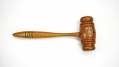
GETTYSBURG BULLET-STRUCK WOOD SOUVENIR GAVEL
This nicely turned wood gavel uses a bullet-struck piece of wood with the base of the bullet visible on one side. On the other is a faint ink stamp reading, “GETTYSBURG / JULY 1.2.3. 1863” on the… (2025-390). Learn More »
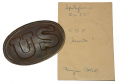
W.H. SMITH MARKED US CARTRIDGE BOX PLATE RECOVERED BY SYD KERKSIS AT MYER’S HILL SPOTSYLVANIA IN DECEMBER 1955
This maker-marked cartridge box plate was found at Myer’s Hill, the scene of fighting on May 14 at Spotsylvania as Grant tried to strike the right of the Confederate line, but poor roads delayed his… (2025-786). Learn More »
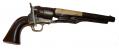
TAGGED BATTLEFIELD PICK-UP COLT ARMY: FRACTURED BARREL & BLOWN CYLINDER WITH A BULLET STILL IN IT - CONFEDERATE RETREAT ROUTE FROM RICHMOND 1865
This Colt Army .44 revolver has matching serial number 81634 on all but the cylinder, giving it a late 1862 date of production. The cylinder has been with it forever and is numbered [.]9439, probably… (766-2014). Learn More »
$4,500.00
SOLD
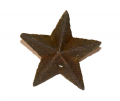
FREDERICKSBURG RECOVERED STAR CAPE PIN
A small, stamped brass five-pointed star 1-7/8” point to point. This has a flange on the back that is pierced and a small hole in the face for attachment. These are usually taken to be cape pins-… (1262-13). Learn More »
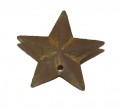
FREDERICKSBURG RECOVERED STAR CAPE PIN
A small, stamped brass five-pointed star 1-1/8” point to point. This has a flange on the back that is pierced and a small hole in the face for attachment. These are usually taken to be cape pins-… (1262-12). Learn More »
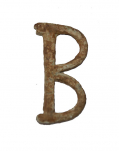
CAMP ART COMPANY LETTER
This is crudely cast from lead and measures 1-1/4” tall. It is good example of Civil War soldiers’ camp art, making use of lead that was readily available and easily melted to make a crude company… (1262-17). Learn More »
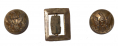
FREDERICKSBURG RECOVERED FORAGE CAP CHINSTRAP INFANTY-I BUTTONS AND FRICTION BUCKLE
Two small size U.S. eagle-infantry-I buttons and the sliding friction buckle from an officer’s or privately purchased forage cap, recovered at Fredericksburg. The brass frame buckle still has a… (1262-07). Learn More »
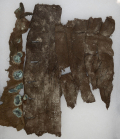
PIECE OF AN INDIAN WAR M1872 FATIGUE BLOUSE FROM FORT PEMBINA, ND
This is a portion of a rare Model 1872 fatigue blouse clearly showing the characteristic pleats of the pattern. These were replacements for the old Civil War M1858 fatigue blouse (the 4-button sack… (1052-579). Learn More »
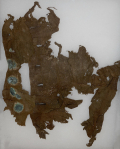
PIECE OF AN INDIAN WAR M1872 FATIGUE BLOUSE FROM FORT PEMBINA, ND
This is a portion of the rare Model 1872 fatigue blouse. The pattern was a replacement for the old Civil War M1858 fatigue blouse (the 4-button sack coat,) made with the idea of giving the soldier… (1052-578). Learn More »
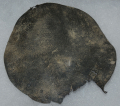
KEPI OR DRESS CAP STIFFENER FROM FORT PEMBINA
This comes from the excavations at Fort Pembina, ND, a small frontier army post in operation from 1870 to 1895, and is the stiffener from inside the top of a kepi a M1872 dress cap. It is black in… (1052-1152). Learn More »
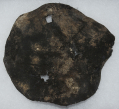
KEPI OR DRESS CAP STIFFENER FROM FORT PEMBINA
This comes from the excavations at Fort Pembina, ND, a small frontier army post in operation from 1870 to 1895, and is the stiffener from inside the top of a kepi a M1872 dress cap. It is black in… (1052-475). Learn More »
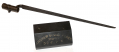
ANDREW GREGG TUCKER POST 52 G.A.R. PLINTH, LEWISBURG, PA, HONORING THE 142nd PA OFFICER KILLED AT GETTSYBURG, WITH A BATTLEFIELD PICKUP BAYONET
This “Black Granite” plinth is painted in gold with the name of the G.A.R. post in which it was used, along with the donor’s name, and the date and location where that post’s officer … (2024-1366). Learn More »

GETTYSBURG MICHIGAN CAVALRY BRIGADE SPENCER RIFLE: SECOND DELIVERY “COPELAND” SPENCER, SERIAL #1811 WITH CONFEDERATE “Q” CLEANED AND REPAIRED STAMP
M1860 Spencer Army Rifles are highly sought after and one falling in the serial number range for issue in Custer’s Michigan Cavalry Brigade before Gettysburg is a holy grail for many. This one has… (172-6073). Learn More »
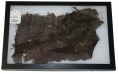
PIECE OF A U.S. FLAG FROM THE FRONTIER US ARMY FORT PEMBINA, NORTH DAKOTA
This piece of bunting comes from excavations at Fort Pembina, ND, conducted on private property with the owner’s permission, a fort established in 1870 by troops of the 20th US Infantry and… (1052-722). Learn More »
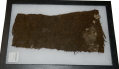
PIECE OF CIVIL WAR - INDIAN WAR FRONTIER US ARMY BLANKET FROM FORT PEMBINA, NORTH DAKOTA
This piece of a US Army military issue blanket comes from excavations at Fort Pembina, ND, conducted on private property with the owner’s permission, a fort established in 1870 by troops of the 20th… (1052-615). Learn More »
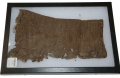
US ARMY SHIRT CUFF FROM FORT PEMBINA, NORTH DAKOTA
A relic from a small U.S. Army frontier post of the Indian Wars- part of a soldier’s shirt. This is the shirt cuff, still showing a small button near the corner, and a portion of the lower sleeve.… (1052-602). Learn More »
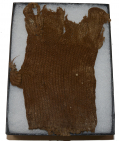
REMNANT OF SCARCE INDIAN WAR SOLDIER’S MITTEN FROM FORT PEMBINA, ND
This comes from the excavations at Fort Pembina, occupied 1870-1895, where cold weather in winter months might well be a concern. The army began issuing mittens in 1873. Before that men were left to… (1052-584). Learn More »
Showing 81 to 100 out of 321
Most Popular
Historical Firearms Stolen From The National Civil War Museum In Harrisburg, Pa »
Theft From Gravesite Of Gen. John Reynolds »
Selection Of Unframed Prints By Don Troiani »
Fine Condition Brass Infantry Bugle Insignia »
featured item
CIVIL WAR COMMODORE’S UNDRESS FROCK COAT OF SILAS H. STRINGHAM, USN: LEADER OF THE FIRST COMBINED OPERATION OF THE UNION NAVY AND ARMY IN THE CIVIL WAR; VICTOR OF THE BATTLE OF HATTERAS INLET BATTERIES
Fought on Aug. 28-29, 1861, little more than a month after the Union defeat at Bull Run, the capture of Forts Hatteras and Clark on the outer banks helped restrict Confederate blockade running, enabled further operations on the North Carolina coast,… (1179-504). Learn More »
site search