


site search
online catalog
Artillery
Showing 101 to 114 out of 114
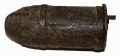
CONFEDERATE 3” MULLANE COMMON SHELL
Here is a fired Confederate 3” bourreleted Mullane Type 1 common shell recovered from an unknown battlefield location. Made for the 3” Ordnance Rifle. Also known as a “Tennessee Sabot”, this… (490-7005). Learn More »
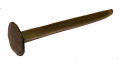
CIVIL WAR “SPINNER” QUILL PRIMERS FOR NAVAL CANNONS
These Naval cannon primers are constructed using fowl quills; less likely to corrode around salt water. These are percussion, not friction primers. In use, these were ignited by the blow from a… (2024-1521). Learn More »
BOOK – FIELD ARTILLERY PROJECTILES OF THE CIVIL WAR 1861-1865 BY KERKSIS & DICKEY
First edition, hardcover signed by both authors. Limited to 500 numbered copies, this is #303. Text clean and unmarked; 307 pages, 8.5” x 11”. The binding is tight and square. Cover is bright and… (2024-1206). Learn More »
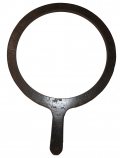
11-INCH SHOT/SHELL GAUGE
These simple iron ring gauges allowed for quick inspection and sorting of shot and shell by size, something of critical importance to a gun crew and a large task given the huge stacks of cannon balls… (490-6807). Learn More »
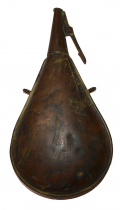
RARE USN GOSPORT NAVY YARD PRIMING FLASK
Gosport Shipyard was the original name of the facility in Portsmouth, Virginia, that was founded in 1767, passed into the hands of Virginia in the Revolution, was leased from that state by the U.S.… (490-6824). Learn More »
$4,500.00
ON HOLD
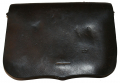
NICE U.S. ARTILLERY FUSE POUCH
The leather is in nice, smooth condition with a pleasing dark brown tone. The latch tab is stitched to the underside of the flap. This tab remains unbroken but well worn. The outer flap is only… (490-6254). Learn More »
THEFT REPORTED AT AUTUMN GETTYSBURG SHOW
A vendor at the Autumn Gettysburg Civil War show held at the Allstar Events Complex on Oct. 28-29 reported that a Maryland sword belt plate valued at $3500 was stolen from a display case on Sunday…. Learn More »
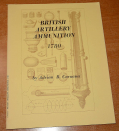
BOOKLET ON 18TH CENTURY BRITISH ARTILLERY AMMUNITION FROM THE LIBRARY OF THE LATE DEAN S. THOMAS
The title of this pamphlet is “BRITISH ARTILLERY AMMUNITION 1780” by Adrian B. Caruana and published by Museum Restoration Service of Bloomfield, Ontario, Canada in 1979. Yellow heavy stock paper… (236-416). Learn More »
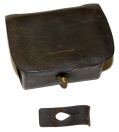
U.S. NAVY FRICTION PRIMER BOX
Small leather box to hold friction primers were carried on the belt (past terminology designated this type box as a Navy fuse box). The box is relatively square in shape to accommodate the shape of… (490-5342). Learn More »
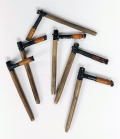
CIVIL WAR QUILL PRIMERS FOR NAVAL CANNONS
These Naval cannon primers are constructed using fowl quills; less likely to corrode around salt water. These are percussion, not friction primers. In use, these were ignited by the blow from a… (490-2928). Learn More »
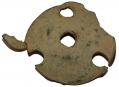
COPPER SABOT FROM 3” MULLANE SHELL FROM GETTYSBURG
Found in Gettysburg after the battle. From the Soldier’s National Museum auction of 2014. Copper sabot stripped from a Confederate 3” Mullane artillery shell. The sabot is a round disk with a… (224-514). Learn More »

MEXICAN WAR TO CIVIL WAR PORTFIRE STOCK
Before the introduction of the friction primer it was necessary to keep a ready flame handy for the lighting of linstocks carrying slow match to fire the gun or to fire it directly and even later they… (1158-07). Learn More »
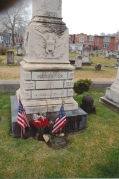
THEFT FROM GRAVESITE OF GEN. JOHN REYNOLDS
A large artillery shell, one of pair that sit on either side of the grave of Gen. John F. Reynolds in Lancaster Cemetery, Lancaster, PA has been removed from the site. If anyone comes into contact…. Learn More »
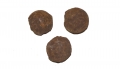
CONFEDERATE 32 LB CANISTER BALL FROM ATLANTA
Offered is a Confederate canister ball from Atlanta Georgia. Each weighs approximately 1 lb. 4 oz. and are 2.10” in diameter. All show signs of moderate to heavy rust. These were uncovered during… (R3556). Learn More »
Showing 101 to 114 out of 114
Most Popular
Historical Firearms Stolen From The National Civil War Museum In Harrisburg, Pa »
Theft From Gravesite Of Gen. John Reynolds »
Selection Of Unframed Prints By Don Troiani »
Fine Condition Brass Infantry Bugle Insignia »
Rare Identified 65Th Ny Sergeant’s Jacket, With Manscript Material: 1St U.s. Chasseurs »
featured item
VERY RARE 1834 ENGINEER AND MEDICAL STAFF SWORD BY HENRY BOKER, BELONGING TO BREVET BRIGADIER GENERAL JOHN HENDRICKSON, WHO LOST A LEG AT FREDERICKSBURG, 83rd NEW YORK VOLS (9th NYSM) AND 13th V.R.C.
New patterns of swords for the U.S. army were developed from 1832 to 1834. This elegant smallsword pattern (variously called by collectors the 1832 or 1834 pattern) was designated for officers of Engineers and Medical Staff (and Pay Department as… (870-325). Learn More »
site search