


site search
online catalog
Firearms
Showing 141 to 160 out of 322
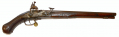
FINE ITALIAN SNAPHAUNCE BELT PISTOL CA. 1675
The snaphaunce is one of the earlier forms of flint and steel ignition and was introduced in the mid-16th century. It remained in use in Northern Italy into the mid-18th century giving it a… (2026-657). Learn More »
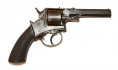
TRANTER-STYLE .38 RIMFIRE REVOLVER – LULLMAN & VIENNA, MEMPHIS
Offered here is a fine Tranter-style .38 caliber rimfire English “House Defense” revolver. Measuring 9” overall, with a 4.25” octagonal blued barrel. Top flat of frame over the cylinder is… (1268-093). Learn More »

M1861 CONTRACT SPRINGFIELD BY TRENTON – 1863/1864
This Model 1861, .58 caliber, percussion rifle musket is complete, and in fine condition. Produced at the Trenton Locomotive and Machine Company by J.T. Hodge and A.M. Burton to meet the armament… (2025-2789). Learn More »
$2,250.00
ON HOLD

CAPTURED AND COLLECTED M1863 SPRINGFIELD TYPE I – “Z” MARKED
Manufactured in Springfield Massachusetts at the Springfield Armory the Model 1863 Rifle Musket is a .58 caliber single shot muzzleloader with a 40” round barrel and three barrel bands. A total of… (2025-2666). Learn More »

BOOK -- THE BIRMINGHAM CARTRIDGE MANUFACTURERS BY HARDING
Hardcover with a dust jacket, 282 pages, 8.5” x 11”. Well-illustrated with some color. Fine condition with just light wear to dust jacket. Publisher by Quiller in 2009.… (236-731). Learn More »
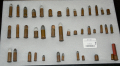
COLLECTION OF RIMFIRE CARTRIDGES
Offered here is a 12” x 8” display case containing 41 old copper-cased rimfire cartridges. Cartridges include a few blanks, some loaded with shot, and most are standard rounds with… (236-1281). Learn More »
$125.00
ON HOLD

REMINGTON 1863 “ZOUAVE” CONTRACT RIFLE
One of the most attractive U.S. martial arms, the Remington 1862/63 Contract Rifle (in Moller’s terminology) has been known for decades as the “Zouave,” a nickname that is hard to overcome. And,… (172-6154). Learn More »
$2,850.00
ON HOLD

VERY GOOD ASHER AND PLINY BARTLET US 1808 CONTRACT MUSKET DATED 1811
Asher and Pliny Bartlett of Springfield, Mass., signed an Oct. 31, 1808, US contract for 2,500 muskets to be delivered over five years and to be of the then current Springfield pattern, with Schmidt… (2025-3656). Learn More »
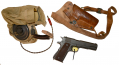
WW2 US AIRCORPS GROUP – M1911 PISTOL, SHOULDER HOLSTER, ANH-15 FLIGHT HELMET – WITH RESEARCHABLE INFORMATION
Offered here are three nice pieces that came in together and are associated to a World War 2 airman. First and foremost is a nice Model 1911 A1, .45 caliber automatic pistol. Serial number 2139818.… (1202-1070). Learn More »
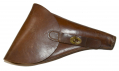
FRENCH M1892 LEBEL REVOLVER HOLSTER – STAMPED
This holster was made for the French Model 1892 Lebel Revolver – in use during both World Wars. Leather is supple and free of major damage or wear. The flap shows some crazing across the top from… (490-7219). Learn More »
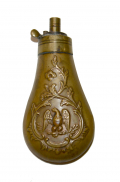
SMALL POWDER FLASK WITH EAGLE MOTIF FOR REVOLVERS
This small flask is likely for early pocket model revolvers in cased sets. Constructed with a copper body and brass top and spout. Measures approximately 4.25” tall x 2” at widest point. Both… (2026-378). Learn More »
CIVIL WAR ERA CIVILIAN-STYLE/PRIVATE PURCHASE HOLSTER BY MOYER
The Moyer firm as saddle and harness makers in Philadelphia dates to 1811. By the time of the Civil War, it was run by brothers William, Edward, and Augustus. They had government contracts in 1862-63… (490-7214). Learn More »
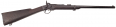
MODEL 1861 OR “FIRST MODEL” SMITH CARBINE, SERIAL #2755, CA. JUNE 1862, WITH NAME
This pattern of Smith carbine has gone through several collector designations: the “Artillery Model,” the “First Model,” and more recently out of deference to some military carbines produced… (1311-04). Learn More »

WAR OF 1812 POMEROY 1809 NY CONTRACT MUSKET
Flayderman refers to Lemuel Pomeroy as, “A prolific maker of Pittsfield, Massachusetts, with entire production evidently devoted to numerous state contracts.” Pomeroy was apparently new to arms… (2025-3658). Learn More »
$1,850.00
ON HOLD

WAR OF 1812 WINNER, NIPPES AND STEINMAN 1808 US CONTRACT MUSKET
Spurred by rising tensions with Britain, most notably the Chesapeake-Leopard Affair of 1807, the US government began letting contracts arms makers for muskets based on the current Harpers Ferry or… (2025-3660). Learn More »
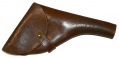
WW1 BRITISH OFFICER’S WEBLEY REVOLVER HOLSTER BY COLE BROS. -- DATED 1916
This is a good original example of a British WW1 officer's leather holster intended for use with a .455 caliber revolver like a Webley Mk. VI, a Colt New Service, or a Smith & Wesson. Constructed… (490-7216). Learn More »
$195.00
SOLD
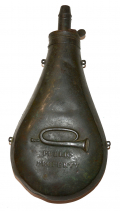
“PUBLIC PROPERTY” MARKED POWDER FLASK
These flasks were made for use with military rifles, particularly the 1817 Common Rifle, but could be used with the Hall or any of the older patterns still in service. Producing hollow-body copper… (1309-752). Learn More »
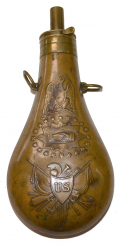
1853 BATTY PEACE FLASK
This is a copper and brass powder flask in nice condition. Measures approximately 9” tall x 4” at widest point. Both sides are adorned with a spread-winged eagle above a circle of stars that… (1256-80). Learn More »
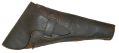
NON-REGULATION FLAP HOLSTER FOR SMALL REVOLVER
This is a non-regulation, left facing, black leather holster made for a small frame revolver. Likely a short barrel “police” type determined by impressions in the leather. A cylinder shape is… (1304-142). Learn More »

INTERESTING STOCK CARVINGS ON US GALLAGER CARBINE
Offered is a mid-war example of a single shot, breech loading, .50 caliber, percussion model Gallagher carbine. These were issued to the Federal cavalry during the Civil War. Mahlon J. Gallager, a… (490-7440). Learn More »
Showing 141 to 160 out of 322
Most Popular
Historical Firearms Stolen From The National Civil War Museum In Harrisburg, Pa »
Theft From Gravesite Of Gen. John Reynolds »
Selection Of Unframed Prints By Don Troiani »
Fine Condition Brass Infantry Bugle Insignia »
Rare Identified 65Th Ny Sergeant’s Jacket, With Manscript Material: 1St U.s. Chasseurs »
featured item
IDENTIFIED ISSUE RED BLANKET OF THEODORE P. BOWKER 13th MASSACHUSETTS - DIED OF WOUNDS AT ANTIETAM!
This is a rare, early-war, identified Massachusetts issue red blanket carried by a soldier in the 13th Massachusetts who was wounded at Antietam on Sept. 17, 1862, and died of those wounds at a U.S. hospital at Rappahannock Station on November 12.… (490-7138). Learn More »
site search