

site search
online catalog
Firearms
Showing 201 to 250 out of 275

CONFEDERATE CONVERSION OF A MODEL 1816 SPRINGFIELD MUSKET
This weapon is a single shot, muzzle loading, .69 caliber smoothbore musket manufactured at the US armory in Springfield. Originally produced as a flintlock it was converted to percussion by the… (1000-114). Learn More »
$2,000.00
Originally $2,500.00
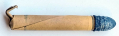
90-BORE (~.36 CALIBER) SHARPS “SPORTING RIFLE” CARTRIDGE
This style of cartridge was originally made prior to the Civil War and eventually replaced in the North by the “New Model” linen cartridges. However, the simple method of just tying the plain… (1212-87). Learn More »
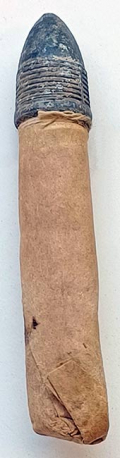
60-BORE (~.44 CALIBER) SHARPS CARTRIDGE, GOMEZ & MILLS PATENT
Here is a very rare 60-Bore Sharps cartridge with a multi-groove bullet by Gomez and Mills. This cartridge is in fine condition. The paper is crisp, and you can clearly see where another cartridge… (1212-85). Learn More »
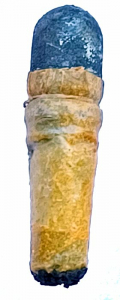
VERY RARE .36 CALIBER SAVAGE “SKIN” CARTRIDGE
Scarce .36 caliber Savage cartridge for Navy revolvers. Here is a cartridge that is rarely offered for sale in this fine condition. This style of cartridge was made by D.C. Sage of Middletown, CT.… (1212-114). Learn More »
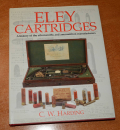
COPY OF “ELEY CARTIDGES” FROM THE LIBRARY OF THE LATE DEAN S. THOMAS
The full title of this volume is “ELEY CARTRIDGES: A HISTORY OF THE SILVERSMITHS AND AMMUNITION MANUFACTURERS” by C. W. Harding and published by Quiller Press of Wykey, Shrewsbury, England in… (236-469). Learn More »
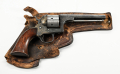
HANDSOME INSCRIBED MOORE REVOLVER WITH HOLSTER OF C.H. RICHMOND
Moore revolvers used the .32 caliber self-contained metallic rimfire cartridge, which was available and convenient. They were not subject to damage by rough handling, weather resistant, and made a… (2023-2603). Learn More »
$5,500.00
SOLD
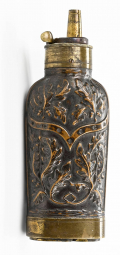
ELEGANT DOUBLE COMPARTMENT PISTOL POWDER FLASK
This small pistol flask is embossed with an attractive pair of oak leaf and acorn clusters in the top quarter, below which a long, thin, scrolling chevron with dots separates it from a pair of knotted… (490-5380). Learn More »
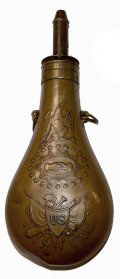
1849 DATED MEXICAN WAR ERA BATTY “PEACE” POWDER FLASK
Brass powder flask in good condition. The body has one small ding at bottom with a small seam opening. The decoration on the flask consists of a spread-winged eagle above a circle of 20 five-pointed… (160-170). Learn More »
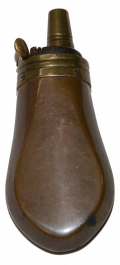
SMALL PISTOL POWDER FLASK
This is very small powder flask, possibly of European manufacture and perhaps made on contract for an American retailer, intended for a pocket revolver or small single shot pistol. Measures… (490-5248). Learn More »

MODEL 1858 CADET MUSKET DATED 1858
An original Springfield Model 1858 Cadet rifle musket in .58 caliber in nice condition. Metal surfaces appear to have been cleaned and are bright. The 38.00-inch barrel has a surface that wears a… (490-3489). Learn More »
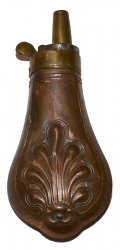
SMALL PISTOL POWDER FLASK
This is very small powder flask, possibly of European manufacture and perhaps made on contract for an American retailer, intended for a pocket revolver or small single shot pistol. Measures… (490-5247). Learn More »
VOLUME 1 OF REFERENCE WORK CONCERNING WESTERN PENNSYLVANIA GUNSMITHS
Title is “GUNSMITHS OF WESTERN PENNSYLVANIA VOLUME 1” by Thomas J. Metzgar and James B. Whisker. Published by Old Bedford Village Press of Bedford, Pennsylvania in 1998. Volume is hardcover and… (798-74). Learn More »
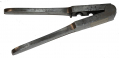
BULLET MOLD FOR .31 CALIBER REVOLVER
Iron, two cavity bullet mold for the .31 caliber revolver. It casts one round ball and one elongated bullet. There is no sprue cutter. Cavities remain clean and crisp. There are several small dings on… (490-4365). Learn More »
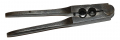
BULLET MOLD FOR .31 CALIBER REVOLVER
Iron, two cavity bullet mold for the .31 caliber revolver. It casts one round ball and one elongated bullet. There is no sprue cutter. There are several small dings on exterior where the mold needed… (490-4364). Learn More »
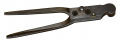
BULLET MOLD FOR .31 CALIBER (120 GAUGE) ADAMS REVOLVER
Brass, two cavity bullet mold for 120 gauge (approx. .31 caliber) English Adams revolver. It casts two elongated bullets. These feature a pointy nose, two grooves, and a solid base. Iron sprue cutter… (490-4378). Learn More »
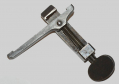
M-1855 MAINSPRING VISE FOR CONVERSION MUSKETS
Mainspring vise for the many types of early muskets that were converted to percussion ignition. Typical vise mechanism with offset bar to accommodate the older flintlock mainsprings. Excellent… (490-4363). Learn More »
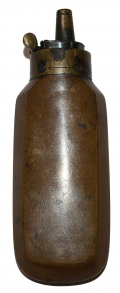
PLAIN PISTOL POWDER FLASK
Constructed with plain copper body and brass top. Funnel unscrews and spring still works. Measures approximately 4.5" tall x 1.5" wide x 1" thick. All surfaces are unadorned, with sides that have… (490-4416). Learn More »
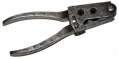
BULLET MOLD FOR .45 CALIBER, COLT M1878 REVOLVER
Iron, two cavity bullet mold for the .45 caliber Colt Model 1878 revolver. It casts two elongated bullets with grooves. These are the “.45 Long Colt” bullets. Sprue cutter is attached to the top… (490-4399). Learn More »
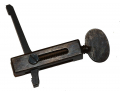
M-1855 MAINSPRING VISE FOR CONVERSION MUSKETS
Mainspring vise for the many types of early muskets that were converted to percussion ignition. Typical vise mechanism with offset bar to accommodate the older flintlock mainsprings. Excellent… (490-4380). Learn More »
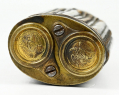
COMPARTMENTED POWDER FLASK FOR THE AMERICAN MARKET, LIKELY FOR A CASED PAIR OF PHILADELPHIA DERRINGERS
This powder flask was certainly made for the American market. The bottom is fitted with two small, round hinged covers for interior compartments, each with an eagle with raised wings, a U.S. shield on… (30-2245). Learn More »
$575.00
Originally $695.00
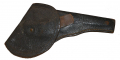
CIVIL WAR LEATHER HOLSTER FOR COLT ROOT OR SIMILAR POCKET REVOLVERS
The black leather of the holster is somewhat stiff but can be coaxed to take a weapon. The leather surface shows light crazing throughout. The holster has a rather wide flap with two parallel rows of… (490-3203). Learn More »
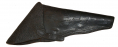
CIVIL WAR FLAP HOLSTER FOR SMALL POCKET MODEL REVOLVERS
This is a black leather holster made for revolvers. The leather still shows the faint “profile” of a revolver cylinder and barrel. A .31 caliber “pocket” model Colt fits into this holster. The… (2022-1071). Learn More »
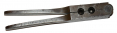
RARE BULLET MOLD FOR .31 CALIBER "WELLS FARGO" M-1849 COLT REVOLVER
Very rare iron, two cavity bullet mold for the .31 caliber "Wells Fargo" Colt revolver. It casts one round ball and one elongated bullet. There is no sprue cutter. Marked "COLT'S / PATENT" across the… (490-4400). Learn More »
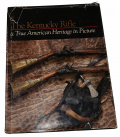
1985 STUDY ON THE KENTUCKY RIFLE BY THE KENTUCKY RIFLE ASSOCIATION
The full title of this volume is “THE KENTUCKY RIFLE; A TRUE AMERICAN HERITAGE IN PICTURE” by The Kentucky Rifle Association and published by Forte Group of Alexandria, Virginia in 1985. The… (1032-132). Learn More »
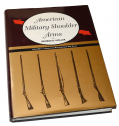
VOLUME 1 ONLY OF “AMERICAN MILITARY SHOULDER ARMS” BY MOLLER
The full title of this volume is “AMERICAN MILITARY SHOULDER ARMS – VOLUME 1: COLONIAL AND REVOLUTIONARY WAR ARMS” by George D. Moller and published by University Press of Colorado in 1993. The… (1032-131). Learn More »
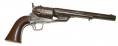
TYPE-I RICHARDS CONVERSION COLT MODEL 1860 ARMY REVOLVER
This is great early western Colt center-fire .44 caliber revolver of the 1870s in good condition. The Colt Richards conversion of the 1860 Army was produced starting in 1871 following the expiration… (490-3461). Learn More »
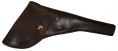
CONFEDERATE FLAP HOLSTER FOR REVOLVER
Hard to find, this is a non-regulation leather holster made to accommodate a large revolver such as a Colt or Remington “Army” revolver. The holster measures 12” along the front edge. Holster is… (1052-209). Learn More »
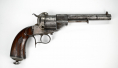
SPANISH MADE LEFAUCHEUX BY ORBEA HERMANOS
This follows the pattern generally termed the Model 1854, but there were variations. Holding six pinfire 12mm (about .47 caliber) cartridges loaded in the cylinder through a side loading gate and… (2022-2415). Learn More »
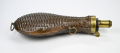
DIXON & SON MARKED POWDER FLASK
This is a pretty powder flask with an adjustable spout and brown lacquered body impressed with a basket weave design on the faces and leaves curling up on either edge, with small brass suspension… (1184-74). Learn More »
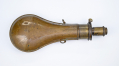
HAWKSLEY MARKED POWDER FLASK
Good condition, plain body powder flask with prominent edge seam and adjustable spout measured in drams. Stamped “G.& J.W. HAWKSLEY / SHEFFIELD” on the top of the collar. Constructed with… (1184-71). Learn More »
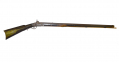
DERINGER MILITARY FLINTLOCK RIFLE CONVERTED TO PERCUSSION
These rare military arms were produced by Henry Deringer of Philadelphia between 1810 -1820. Overall this weapon meas. approx. 54.00 inches long. The octagon barrel is approx. 38.00 inches long and… (911-57). Learn More »
$4,675.00
Originally $5,200.00
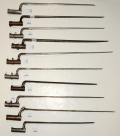
SELECTION OF SOCKET BAYONETS
Below is a list of the bayonets included in the above photos, from top to bottom. Please refer to the individual item#'s when asking questions or placing an order. ITEM# BAYONET… (490-). Learn More »

SCARCE U.S. MODEL 1841 PERCUSSION CADET MUSKET
The Model 1841 Cadet musket was made by the Springfield Armory between 1844-1845 with a total of only 450 produced. These weapons were made in .57 caliber with a 40” round barrel. Metal surfaces are… (490-3481). Learn More »
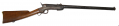
SHARPS AND HANKINS NAVY CARBINE
This is very good example of the single-shot, breech-loading .52 Caliber rimfire Sharps and Hankins Navy Carbine, also known as the Model 1862, complete, all original, with a crisp action, clean and… (172-5792). Learn More »
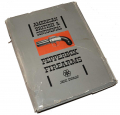
AMERICAN BRITISH & CONTINENTAL PEPPERBOX ARMS
By Jack Dunlap. Pacific PB Books, Palo Alto, CA., 1964. [Reissue 1967]. 279pp, figures & ills, dust jacket. In gray glazed cloth, 11.25 x 8.5, w/red cover ornament and black cover and spine… (1032-130). Learn More »
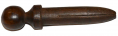
TOMPION FOR BURNSIDE CARBINE
A wood tompion for a cavalryman’s .54 caliber Burnside carbine. This has the characteristic ball top, pointed tip, and cruciform slotted body of the Burnside tompions. They are occasionally seen in… (490-3945). Learn More »
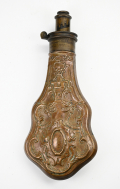
HAWKSLEY POWDER FLASK
This has a wonderful profusion of design elements that seems to combine rococo foliate C-scrolls symmetrically arranged with some geometric ornaments- something in the “too much is not enough”… (1184-75). Learn More »
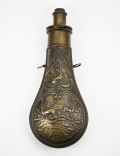
HAWKSLEY POWDER FLASK
A nicely decorated sportsman’s powder flask decorated in two panels with a hunting dog at top and the hunter’s prey at bottom: two stags with prominent antlers standing over a row of five less… (1184-73). Learn More »
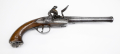
SILVER-MOUNTED QUEEN ANNE TURN-OFF BARREL PISTOL BY NATHANIEL TREVEY CA. 1740-50
Using a truncated stock not extending past the lock and a barrel fitted with a lug at the bottom breech to allow it to be unscrewed for loading, these pistols became popular in the reign of Queen Anne… (490-3434). Learn More »
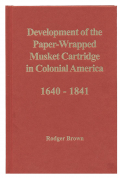
DEVELOPMENT OF THE PAPER-WRAPPED MUSKET CARTRIDGE IN COLONIAL AMERICA, 1640-1841
Brown, Rodger. 2022. Hardback, 6 x 9 ¾”. 96 pages; numerous b&w photos and illustrations. During the Revolutionary War, both armies in the conflict were armed with muzzleloading smoothbore… (ST501205). Learn More »
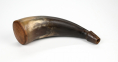
SMALL HUNTER’S POWDER HORN
This horn dates roughly 1820-1850. It is a plain, working powder horn only about 5 ¼ inches long, a size sometimes thought to be just for priming powder for a flintlock, but convenient enough to be… (1184-79). Learn More »
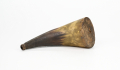
SMALL HUNTER’S POWDER HORN
This horn dates roughly 1820-1850. It is a plain, working powder horn only about 5 3/4 inches long, a convenient size for pocket or hunting bag. Sometimes considered a small horn just for priming… (1184-77). Learn More »

SCARCE 1799 DATED SPRINGFIELD 1795 TYPE-II MUSKET
Springfield was designated one of two US armories for the manufacture of arms in 1794 and production of the “US muskets, Charleville pattern” (designated the Model 1795 by collectors for… (1052-68). Learn More »

RICHMOND TYPE-II RIFLE MUSKET, MID-1862
This is very good example of a Richmond Type-II rifle musket made in mid-1862 showing the beveled low-hump lock plate introduced in March 1862 and using the early 1862 die strike replaced later in the… (490-2958). Learn More »
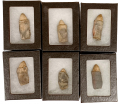
“DUG” .50 CALIBER SMITH “RUBBER CASE” CARTRIDGES
Used in the Smith carbine extensively during the early years of the Civil War, we have several specimens of these unusual .50 caliber “rubber case” cartridges in excavated “relic”… (2022-1238). Learn More »

U.S. SPRINGFIELD MODEL 1807 (RECONVERTED) FLINTLOCK “INDIAN CARBINE”, DATED 1808
Springfield Armory manufactured 1,202 .54 caliber smoothbore flintlock carbines for the Indian Department between 1807 and 1810. The carbines were intended as gifts for the Native American tribes, but… (1052-97). Learn More »

MODEL 1892 WINCHESTER RIFLE
Serial number 70464, this Model 1892 Winchester is .38 WCF, was made in 1894, and rates near Fine for overall condition with 80% thin shiny blue on the receiver, stronger on the right, with some… (169-533). Learn More »
$4,350.00
ON HOLD
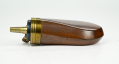
SYKES MARKED FLASK FOR POCKET OR MUFF PISTOLS
This small copper and brass flask is in near mint condition with a very pleasing brown lacquer tone to the copper body, medium untouched patina to the brass collar and spout, and vibrant blue to the… (30-2246). Learn More »
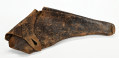
MILITARY FLAP HOLSTER FOR A .31 CALIBER REVOLVER
This is a scarce example of a privately purchased belt holster with a military style flap to carry a small .31 caliber percussion revolver, typical of those carried for personal defense by officers… (480-221). Learn More »
$446.00
Originally $495.00
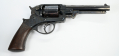
DOUBLE-ACTION STARR .44 REVOLVER, LIKELY DELIVERED IN APRIL 1863
This double-action Starr revolver is complete, all original, and rates about Excellent for condition, with better than 80 percent original finish, sharp lettering numbering, and very pretty, unmarred… (490-2988). Learn More »
$5,950.00
ON HOLD
Showing 201 to 250 out of 275
Most Popular
Historical Firearms Stolen From The National Civil War Museum In Harrisburg, Pa »
Theft From Gravesite Of Gen. John Reynolds »
Selection Of Unframed Prints By Don Troiani »
Fine Condition Brass Infantry Bugle Insignia »
Large English Bowie Knife With Sheath 1870’S – 1880’S »
Imported (Clauberg) Us Model 1860 Light Cavalry Officer's Saber »
featured item
CIVIL WAR INFANTRY SERGEANT’S FOUR-BUTTON FATIGUE BLOUSE
This is a very good example of a very rare Civil War uniform: the 4-button blouse originally designated for “fatigue” wear in the regular army, but which quickly became the standard field uniform in the Union army, worn by enlisted men in all… (1268-268). Learn More »
site search