


site search
online catalog
Artillery
Showing 1 to 20 out of 134
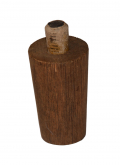
LARGE ARTILLERY FUZE PLUG/ADAPTER WITH ORIGINAL 25-SECOND FUZE
This comes from the artillery section of an older collection we are handling, much of which was acquired from the famous Bannerman military surplus operation in the early 1960s after it had shut its… (2026-9230). Learn More »
$75.00
ON HOLD
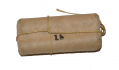
TWO 15-SECOND ARTILLERY FUZES IN ORIGINAL PACK
This comes from the artillery section of an older collection we are handling, much of which was acquired from the famous Bannerman military surplus operation after it had shut its New York City store… (2026-9234). Learn More »
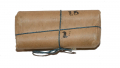
TWO 15-SECOND ARTILLERY FUZES IN ORIGINAL PACK
This comes from the artillery section of an older collection we are handling, much of which was acquired from the famous Bannerman military surplus operation after it had shut its New York City store… (2026-9233). Learn More »
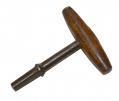
CIVIL WAR ARTILLERY WOODEN FUZE PLUG AUGER
This tool is illustrated in Arms and Equipment of the Union as a wooden fuze plug auger. These are understood by most collectors to be used simply to ream out wood fuze plugs, commonly used in… (2026-9004). Learn More »
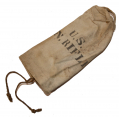
SPONGE COVER FOR THE 3-INCH RIFLE
This is postwar US artillery sponge cover made of heavy canvas with a strap at top as a handle and knotted cord running along the bottom to tie it over the sponge head of an artillery rammer/sponge… (2026-9420). Learn More »
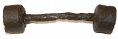
REVOLUTIONARY WAR IRON BAR SHOT, CYLINDRICAL-HEAD ("HAMMER") TYPE, RECOVERED IN THE CHAMPLAIN VALLEY, CIRCA LATE 18TH CENTURY
A solid wrought- and cast-iron bar shot of the cylindrical-head form, comprising two drum-shaped heads united by a single rigid bar. Bar shot — "dismantling shot" — was anti-rigging ordnance fired… (1298-21). Learn More »
$1,395.00
Originally $1,850.00
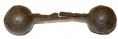
REVOLUTIONARY WAR / WAR OF 1812 IRON BAR SHOT (c. 1775-1815)
Iron bar shot of the classic two-headed ("dumbbell") form: a pair of solid cast-iron spheres joined by a heavy central bar. USE: Bar shot was first and foremost an anti-rigging round. In a naval… (1298-20). Learn More »
$1,395.00
Originally $1,850.00
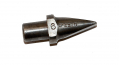
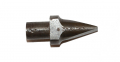
US ARTILLERY FRONT BLADE SIGHT FOR A 6-PDR GUN
Unfinished sight blade, bottom threads not machined! Used during the Civil War, the sight is a small (1.55”), flattish steel peg designed to be mounted at the muzzle of a cannon. It was used to… (2026-9103). Learn More »
US ARTILLERY FRONT BLADE SIGHT FOR A 6-PDR GUN
Unfinished sight blade, bottom threads not machined! Used during the Civil War, the sight is a small (1.555”), flattish steel peg designed to be mounted at the muzzle of a cannon. It was used to… (2026-9102). Learn More »
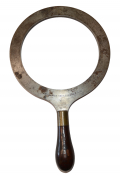
US NAVY 24-POUNDER SHELL RING GAUGE
These simple iron ring gauges allowed for quick inspection and sorting of shot and shell by size, something of critical importance to a gun crew and a large task given the huge stacks of cannonballs… (2026-9337). Learn More »
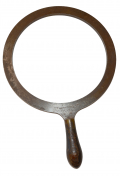
US NAVY 10-INCH SHELL RING GAUGE
These simple iron ring gauges allowed for quick inspection and sorting of shot and shell by size. This one was made and marked to so sort out shells for 10-Inch guns, developed in the 1840s and often… (2026-9443). Learn More »
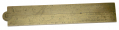
VERY EARLY FRENCH BRASS FOLDING ARTILLERY “SECTOR” BY CHAPOTOT
Offered here is an antique French folding sector rule. This brass sector (aka sector rule, proportional compass, or military compass) is a very early analog mathematical calculating device, dating… (1329-28). Learn More »
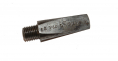
US ARTILLERY FRONT BLADE SIGHT FOR A 12-PDR “LIGHT” GUN
Finished sight blade, threaded at the bottom. Used during the Civil War, the sight is a 1.65” tall, flattish steel peg designed to be mounted at the muzzle of a cannon. It was used to provide… (2026-9101). Learn More »
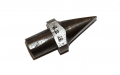
US ARTILLERY FRONT BLADE SIGHT FOR A 12-PDR GUN
Unfinished sight blade, bottom threads not machined! Used during the Civil War, the sight is a small (1.38”), flattish steel peg designed to be mounted at the muzzle of a cannon. It was used to… (2026-9100). Learn More »
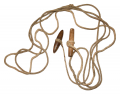
SPANISH AMERICAN WAR CANNON LANYARD GRIP FROM THE DEWEY'S FLAGSHIP
This unusual item has two turned wooden handles at either end of an approximately 15-foot-long linen rope. Its purpose was to facilitate ignition of the naval guns on US ships of war. This one in… (2026-9249). Learn More »
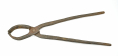
PRE-CIVIL WAR OR CIVIL WAR HOT SHOT TONGS
Another scarce piece from the artillery section of a respected older collection we recently acquired, much of which came directly from Bannerman’s island or their Blue Point Long Island operation.… (2026-9336). Learn More »
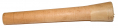
1864 DATED WOODEN MORTAR FUZE
A complete wooden artillery fuze, measuring about 9-1/2” overall, still bearing its labeled cap on the top reading, “5 / SECONDS / TO THE INCH / 1864.” Excellent condition. These are tapered… (2026-9181). Learn More »
$225.00
ON HOLD
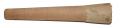
1864 DATED WOODEN MORTAR FUZE
A complete wooden artillery fuze, measuring about 9-1/2” overall, still bearing its labeled cap on the top reading, “5 / SECONDS / TO THE INCH / 1864.” Excellent condition with very minor losses… (2026-9183). Learn More »
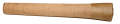
1864 DATED WOODEN MORTAR FUZE
A complete wooden artillery fuze, measuring about 9-1/2” overall, still bearing its labeled cap on the top reading, “5 / SECONDS / TO THE INCH / 1864.” Excellent condition with very minor losses… (2026-9182). Learn More »
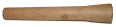
1862 DATED WOODEN MORTAR FUZE
A complete wooden artillery fuze, measuring about 9-1/2” overall, still bearing its labeled cap on the top reading, “5 / SECONDS / TO THE INCH / 1862.” Excellent condition with very minor losses… (2026-9184). Learn More »
Showing 1 to 20 out of 134
Most Popular
Historical Firearms Stolen From The National Civil War Museum In Harrisburg, Pa »
Theft From Gravesite Of Gen. John Reynolds »
Selection Of Unframed Prints By Don Troiani »
Fine Condition Brass Infantry Bugle Insignia »
Rare Identified 65Th Ny Sergeant’s Jacket, With Manscript Material: 1St U.s. Chasseurs »
featured item
5th NEW YORK NATIONAL GUARD COMPANY E FLANK MARKER
This very attractive blue silk marker with gold fringe and embroidered unit designation comes with a 1995 letter from flag authority Howard Madaus, a 2004 treatment report by Textile Preservation Associates, the well-known and highly respected… (1179-014). Learn More »
site search