


site search
online catalog
Artillery
Showing 1 to 50 out of 56
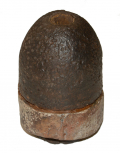
FIRED CONFEDERATE 3.3 INCH ARCHER SHELL WITH TIE RING BASE – MINE RUN, VA
According to Peter George, co-author of Field Artillery Projectiles of the American Civil War, "this shell is extremely rare as very few have been recovered". He also mentioned that "this specific… (2026-551). Learn More »
$975.00
SOLD
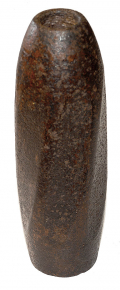
BRITISH 2.72 INCH 12 POUNDER WHITWORTH SHELL
Known as the Whitworth pattern I, sub-pattern II, explosive shell. This hexagonal spiral rifled artillery projectile was of Sir Joseph Whitworth’s design and is of English manufacture. These… (2026-533). Learn More »
LONG STYLE CONFEDERATE FUSE ADAPTER FROM GETTYSBURG
The most widely used Confederate fuse plugs were the copper time fuse adapters with two spanner holes in the head. These fuse adapters came in various lengths and head diameters. This long style was… (2025-1670). Learn More »
RELIC US 3” PARROTT FUSE ADAPTER FROM GETTYSBURG
Zinc Parrott (long) fuse adapter measuring approximately 2.5” long. From a fired shell. Head is flanged with spanner holes and measures about 1.25” in diameter. Some deterioration around the edge… (2025-1669). Learn More »
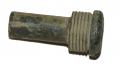
RELIC US 3” HOTCHKISS FUSE ADAPTER FROM GETTYSBURG
Brass Hotchkiss fuse adapter measuring approximately 2.25” long. From a fired shell. Head is flanged with a screwdriver slot and measures about 1.2” in diameter. Threads run about 1/2” down the… (2025-1666). Learn More »
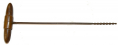
NICE CONDITION US/CS CIVIL WAR ARTILLERY GIMLET
Civil War artillery gimlets were used to remove broken friction primers or other obstructions from the vent hole of a cannon tube. This example shows very light surface rust, a wood handle with its… (2025-623). Learn More »
$75.00
ON HOLD
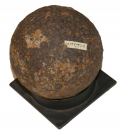
U.S. / C.S. 12-POUNDER SOLID SHOT – GETTYSBURG FOUND
This is the most common solid shot projectile of any caliber used during the Civil War by both the Federal and Confederate forces. This is a solid iron cannon ball with dark brown tone and bubble… (557-16). Learn More »
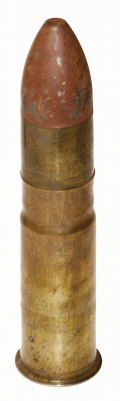
37MM WINCHESTER COMMON SHELL FOR HOTCHKISS GUN
Nice 37mm Hotchkiss round made by Winchester and dated 5-91 (May, 1891). Steel shell with nose painted red and brass rotating band. Base of shell features threaded hole for base fuse (no fuse… (490-1485). Learn More »
$135.00
ON HOLD
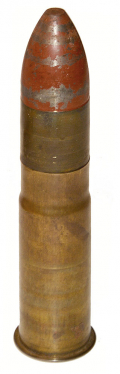
37MM WINCHESTER COMMON SHELL FOR HOTCHKISS GUN
Nice 37mm Hotchkiss round made by Winchester and dated 5-91 (May, 1891). Steel shell with nose painted red and brass rotating band. Base of shell features threaded hole for base fuse (no fuse… (490-1477). Learn More »
$135.00
ON HOLD
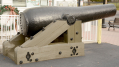
10” CONFEDERATE COLUMBIAD CANNON-TREDEGAR IRON WORKS - FORMER TEXAS MUSEUM
This large cast-iron cannon was produced at the Tredegar Iron Works in Richmond, Va. In 1836, a group of Richmond businessmen and industrialists led by Francis B. Deane, Jr. set about to capitalize on… (1268-1240). Learn More »
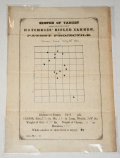
RARE 1860 TARGET SHEET FOR “HOTCHKISS RIFLED CANNON AND PATENT PROJECTILE”
Offered here is a very rare “target sheet” recorded from a test of a Hotchkiss cannon and patent projectile. This is a printed form on polished cotton paper with blank fields and results done in… (2025-1921). Learn More »
$225.00
ON HOLD
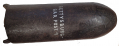
EXCAVATED U.S. 3” PARROTT SHELL FROM GETTYSBURG GAR POST #9
Here is a Gettysburg excavated Civil War Federal 3” field artillery projectile often referred to as a Parrott Type III shell excavated from an unknown location area on the Gettysburg battlefield… (2024-2135). Learn More »
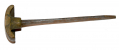
BORMANN FUSE PUNCH
This is a punch that was used to punch the Bormann time fuse. It is 4.5” in length. The handle is made of brass and is half-moon shaped. The punch shaft is made of steel and has a light surface… (2025-3107). Learn More »
$145.00
SOLD
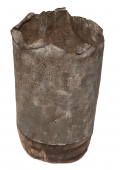
US/CS 12-POUNDER CANISTER
This is an original, albeit partial, Civil War canister round for 12-pounder Napoleon, the smoothbore bronze cannon adopted in 1857 and one of main weapons of Civil War field artillery. This piece… (1202-486). Learn More »

CIVIL WAR ARTILLERY PENDULUM HAUSSE LEATHER CASE
This is a scarce piece of Civil War artillery related leather. This is a pendulum hausse sight case. Pendulum Hausse sights were weighted brass pieces that were mounted on the breech of a cannon and… (2025-2038). Learn More »
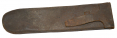
CIVIL WAR ARTILLERY PENDULUM HAUSSE LEATHER CASE
This is a scarce piece of Civil War artillery related leather. This is a pendulum hausse sight case. Pendulum Hausse sights were weighted brass pieces that were mounted on the breech of a cannon and… (2025-2022). Learn More »
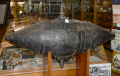
EXTRAORDINARILY RARE AND IMPORTANT CONFEDERATE RAINS BARREL TORPEDO - 1 OF 2 KNOWN - FROM THE TEXAS MUSEUM
This is a Rains barrel torpedo that was recovered during the Civil War in Mobile Bay, AL. It was developed by Gabriel James Rains, Chief of the Confederate Torpedo Service. Gabriel Rains was born in… (1268-690). Learn More »
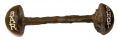
REVOLUTIONARY WAR 6-POUNDER BAR SHOT
Much of the American Revolution took place on the seas between a budding Continental Navy and the powerful British Royal Navy. Naval gunners on both sides fired a range of specialized projectiles from… (1202-950). Learn More »
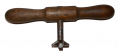
BORMANN FUSE WRENCH WITH PARTIAL NEW JERSEY (?) MARKING
These fuse wrenches were used to screw in and tighten the Bormann fuse in an artillery shell or case-shot. As Civil War artillery and ordnance aficionados will know, the Bormann fuse used a powder… (1202-450). Learn More »
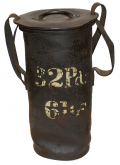
VERY GOOD 1864 DATED US NAVY YARD MARKED PASS BOX FOR THE 32 POUNDER GUN
The 32-pounder was an iron smoothbore cannon used on ships and in coastal fortifications. It was largely superseded by more advanced guns during the war but remained in service throughout, with the… (1268-669). Learn More »
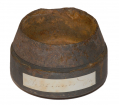
3.8” HOTCHKISS BASE CUP WITH “RICHMOND, VA” LABEL FROM YORK SPRINGS, PA G.A.R. POST #37 COLLECTION
Offered here is an early “battlefield pick-up” relic that was part of the collections on display at the York, PA, #37 “General Sedgwick” Grand Army of the Republic Post. The item is the iron… (1202-878). Learn More »
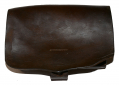
U.S. ARTILLERY FUSE POUCH, ARSENAL MARKED
Very nice condition leather fuse pouch. The leather of the outer flap is in good condition with tooled edge and slight upward curl at the corners. The latch tab is stitched to the underside of the… (2025-176). Learn More »
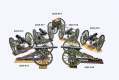
ASSORTMENT OF SCALE MODEL CANNON BY RUSSELL A. NORGAN
Excellent condition assortment of handcrafted, limited edition scale model cannon. Priced at $1,250.00 each except for the limber chest, which is priced at $850.00. Each item has its corresponding… (2025-). Learn More »
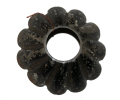
TAYLOR FUSE IGNITER
Here is a tin fuse igniter for Taylor’s time fuse. The Taylor fuse was patented April 11, 1865, so did not see any use during the Civil War. The purpose of these tin “igniters” was to direct the… (1202-455). Learn More »
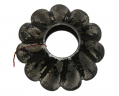
TAYLOR FUSE IGNITER
Here is a tin fuse igniter for Taylor’s time fuse. The Taylor fuse was patented April 11, 1865, so did not see any use during the Civil War. The purpose of these tin “igniters” was to direct the… (1202-454). Learn More »

ARTILLERY VENT PUNCH FOR FIELD GUNS
This is a tool for clearing the vent of any obstructions such as pieces of fired friction primers. It has a six-sided head with a hole in the center, and an 8” wire brazed to it. The wire ends with… (1202-471). Learn More »
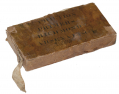
RARE PACK OF CONFEDERATE, RICHMOND ARSENAL, ARTILLERY FRICTION PRIMERS
Offered here is a very rare, nice condition, original pack of artillery friction primers manufactured at the Richmond Arsenal in Virginia during the Civil War. These “primers” are what was placed… (1268-512). Learn More »
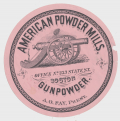
AMERICAN POWDER MILLS BOSTON CIRCULAR LABEL
Measures 6” in diameter. Nice woodcut of a cannon in center; printed on pink paper. Minor damage to each. [ss] [PH:L] ~~~~~~~~~~~~~~~~~~~~~~~~~~~~~~~~~~~ THIS ITEM, AS WITH ALL OTHER ITEMS AVAILABLE… (516-572). Learn More »
$35.00
Originally $44.00
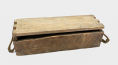
BRITISH ARTILLERY SHIPPING CRATE
This is one of several scarce British artillery crates that recently came to hand, some of which were marked “Quebec.” This is clearly stenciled in black on one end: “11/59” / “W[broad… (2024-1156). Learn More »
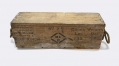
BRITISH ARTILLERY SHIPPING CRATE
This is one of several scarce British artillery crates that recently came to hand, some of which were marked “Quebec.” Along with other ordnance and shipping markings, this is clearly stenciled at… (2024-1154). Learn More »

ARTILLERY GIMLET FOR 12-INCH GUN – WATERVLIET ARSENAL
The "gimlet" has a screw on the end and was intended to be used to remove broken pieces of friction primers from the vent. It could also serve as a priming wire to poke a hole in the powder bag. This… (2024-2312). Learn More »
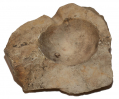
STONE MOLD HALF FOR LARGE GRAPE SHOT
This piece is an early mold half for a round grape shot ball. This piece measures approximately 3.5” x 2” x 2.5”. The cavity measures just shy of 2” in diameter. The funnel leading into the… (236-1026). Learn More »

ARTILLERY VENT PUNCH FOR 12-INCH MORTAR – WATERVLIET ARSENAL
This is a tool for clearing the vent of any obstructions. It has an octagonal head with a hole in the center, and a 21” wire brazed to it. The wire tappers at the end. The flat head is stamped,… (2024-2314). Learn More »
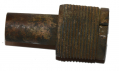
RELIC -- US NAVAL WATERCAP FUSE WITH BUSHING, DATED 1864
Excavated naval watercap fuse dated 1864 and in good condition. This fuse is made of brass with flange on top, with threaded portion and tapered body. A brass bushing is on this fuse to fit into… (2024-2327). Learn More »
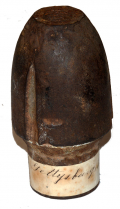
3” HOTCHKISS SHELL WITH GETTYSBURG TAG – FROM YORK SPRINGS GAR POST
This shell is part of the collection that was housed at the York Springs GAR Post 551. Many of the items were collected and curated by David Starry, a Civil War veteran who served in an emergency… (1202-230). Learn More »
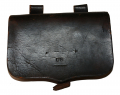
U.S. ARTILLERY FUSE POUCH MARKED “US”
Very nice condition leather fuse pouch. The leather of the outer flap is in very good condition. There is some crazing on the top “hinge” area of the flap. There is a deep “US” stamp on the… (864-14). Learn More »
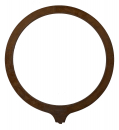
1855 DATED 11-INCH SHOT/SHELL GAUGE
These simple iron ring gauges allowed for quick inspection and sorting of shot and shell by size, something of critical importance to a gun crew and a large task given the huge stacks of cannon balls… (490-6754). Learn More »
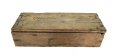
BRITISH ARTILLERY CRATE FOR 9-POUND SOLID SHOT
The smooth-bore, muzzle-loading 9-pounder cannon was a standard British field-piece in service from 1805 to 1881, with a maximum range of about 1,400 yards and notable service in the Napoleonic Wars… (2024-1155). Learn More »
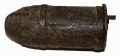
CONFEDERATE 3” MULLANE COMMON SHELL
Here is a fired Confederate 3” bourreleted Mullane Type 1 common shell recovered from an unknown battlefield location. Made for the 3” Ordnance Rifle. Also known as a “Tennessee Sabot”, this… (490-7005). Learn More »
CIVIL WAR “SPINNER” QUILL PRIMERS FOR NAVAL CANNONS
These Naval cannon primers are constructed using fowl quills; less likely to corrode around salt water. These are percussion, not friction primers. In use, these were ignited by the blow from a… (2024-1521). Learn More »
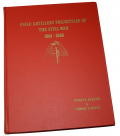
BOOK – FIELD ARTILLERY PROJECTILES OF THE CIVIL WAR 1861-1865 BY KERKSIS & DICKEY
First edition, hardcover signed by both authors. Limited to 500 numbered copies, this is #303. Text clean and unmarked; 307 pages, 8.5” x 11”. The binding is tight and square. Cover is bright and… (2024-1206). Learn More »
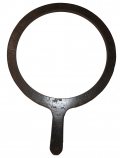
11-INCH SHOT/SHELL GAUGE
These simple iron ring gauges allowed for quick inspection and sorting of shot and shell by size, something of critical importance to a gun crew and a large task given the huge stacks of cannon balls… (490-6807). Learn More »
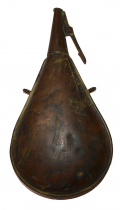
RARE USN GOSPORT NAVY YARD PRIMING FLASK
Gosport Shipyard was the original name of the facility in Portsmouth, Virginia, that was founded in 1767, passed into the hands of Virginia in the Revolution, was leased from that state by the U.S.… (490-6824). Learn More »
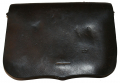
NICE U.S. ARTILLERY FUSE POUCH
The leather is in nice, smooth condition with a pleasing dark brown tone. The latch tab is stitched to the underside of the flap. This tab remains unbroken but well worn. The outer flap is only… (490-6254). Learn More »
THEFT REPORTED AT AUTUMN GETTYSBURG SHOW
A vendor at the Autumn Gettysburg Civil War show held at the Allstar Events Complex on Oct. 28-29 reported that a Maryland sword belt plate valued at $3500 was stolen from a display case on Sunday…. Learn More »
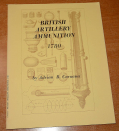
BOOKLET ON 18TH CENTURY BRITISH ARTILLERY AMMUNITION FROM THE LIBRARY OF THE LATE DEAN S. THOMAS
The title of this pamphlet is “BRITISH ARTILLERY AMMUNITION 1780” by Adrian B. Caruana and published by Museum Restoration Service of Bloomfield, Ontario, Canada in 1979. Yellow heavy stock paper… (236-416). Learn More »
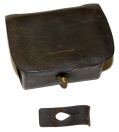
U.S. NAVY FRICTION PRIMER BOX
Small leather box to hold friction primers were carried on the belt (past terminology designated this type box as a Navy fuse box). The box is relatively square in shape to accommodate the shape of… (490-5342). Learn More »
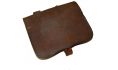
CONFEDERATE ARTILLERY FUSE POUCH WITH LEAD FINIAL
Brown leather Confederate artillery fuse pouch is in good condition. This is the leather pouch that went on the side of the Confederate artilleryman. It held his paper time fuses for firing the… (381-20). Learn More »
$3,150.00
Originally $3,950.00
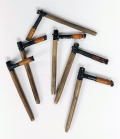
CIVIL WAR QUILL PRIMERS FOR NAVAL CANNONS
These Naval cannon primers are constructed using fowl quills; less likely to corrode around salt water. These are percussion, not friction primers. In use, these were ignited by the blow from a… (490-2928). Learn More »
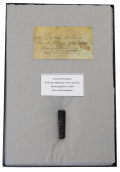
CONFEDERATE TEN SECOND PAPER TIME FUSE
This ten-second fuse originated from the magazine at Fort Jackson, Louisiana. Fuse was recovered by a Union soldier in 1862, who packaged several in a box and documented it by writing the information… (R21944). Learn More »
$200.00
Originally $295.00
Showing 1 to 50 out of 56
Most Popular
Historical Firearms Stolen From The National Civil War Museum In Harrisburg, Pa »
Theft From Gravesite Of Gen. John Reynolds »
Selection Of Unframed Prints By Don Troiani »
Fine Condition Brass Infantry Bugle Insignia »
featured item
CAVALRY OFFICER’S SABRE IDENTIFIED TO CAPTAIN MARCUS A. MOORE, 1ST MASSACHUSETTS CAVALRY
Manufactured: Newark, NJ Maker: Sauerbier, Henry Year: Early Civil War Model: Model 1840 transitional with 1860 style grip Size: 34.2 inch blade, 1.17 wide, .353 thick This sword has all true Type 1 features with the exception of the Model 1860 style… (870-159). Learn More »
site search