

site search
online catalog
Uniforms & Cloth
Showing 1 to 229 out of 229
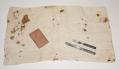
THE BLOODY PILLOWCASE (AND MORE) OF CAPTAIN GOULD – MEDAL OF HONOR RECIPIENT; 5TH VERMONT INFANTRY
The principle and poignant artifact in this grouping is a plain linen "hospital issue" pillowcase stained with the blood of Congressional Medal of Honor winner Captain Charles Gould Company H 5th… (1268-755). Learn More »
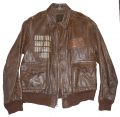
ID’D WW2 LEATHER A-2 FLYING JACKET “SLOW BUT SURE” 457TH BOMB GROUP
This very fine condition A-2 jacket was worn in WW2 by Lt. Neil C. Schroeder. He was a B-17 navigator with the 749th Bomb Squadron, 457th Bomb Group, 8th Air Force in England. Additionally, he served… (534-43). Learn More »
$4,500.00
ON HOLD
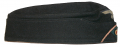
ARMY MODEL 1934/1940 ENLISTED BLACK PANZER FIELD CAP
Exceptional and rare unit marked NCO overseas cap for the black panzer uniform! The black overseas field cap was adopted for wear with the black panzer uniform in early 1940. The design was… (1202-1902). Learn More »
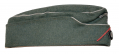
ARMY OFFICER PANZER FIELD CAP WITH DIVISION BADGE
Exceptional officer’s overseas panzer cap with a very rare panzer division badge hand-sewn to the side! The Model 1938 officer’s gray overseas field cap with silver piping was adopted for wear… (1202-1903). Learn More »
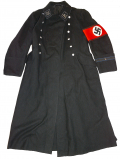
RARE WORLD WAR II GERMAN SS OVERCOAT
This was worn by a non-commissioned officer of the Allgemaine SS (Schutzstaffel), the black SS, the political SS. Made of field service but excellent quality black wool it has a double set of silver… (282-458). Learn More »
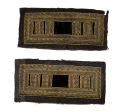
DOUBLE BORDER EMBROIDERED STAFF OFFICER’S CAPTAIN’S SHOULDER STRAPS
Pair of Civil War-era staff officer's shoulder straps featuring double-border gold bullion embroidery on black wool backing. The black backing designates these as staff officer insignia. Each strap… (1202-1802). Learn More »
$525.00
ON HOLD
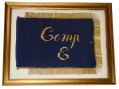
5th NEW YORK NATIONAL GUARD COMPANY E FLANK MARKER
This very attractive blue silk marker with gold fringe and embroidered unit designation comes with a 1995 letter from flag authority Howard Madaus, a 2004 treatment report by Textile Preservation… (1179-014). Learn More »
$6,500.00
Originally $8,500.00
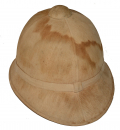
SPANISH AMERICAN WAR ERA US TROPICAL OR SUMMER HELMET
This is a desirable enlisted man's regulation US Army Model 1880 cork helmet designed for tropical conditions in the United States or Abroad. The shell of the "Pith Helmet" or "Gordon Helmet" is… (689-159). Learn More »
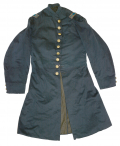
A FROCK COAT WORN IN THE CIVIL WAR BY A VERMONT CAPTAIN
This Infantry officer's frock coat is a private purchase with a nine-button front, three-button cuffs, and four buttons on the rear waist; it was the pattern officially adopted in 1858. The dark blue… (1273-72). Learn More »
$4,850.00
ON HOLD
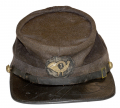
VERY FINE CIVIL WAR UNION OFFICER'S KEPI; FIRST MASSACHUSETTS INFANTRY
This rare piece of headgear just came out of a hidden hoard of militaria in Boston. All these hats were collected for decades exclusively within the State of Massachusetts and can safely be considered… (1273-88). Learn More »
$3,250.00
ON HOLD
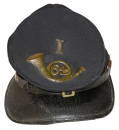
AN EARLY 1858 INFANTRY FORAGE CAP, POSSIBLY PRE-CIVIL WAR MANUFACTURE
This quality private or state purchase hat has early features that distinguish it from those typical mass-produced war contracts. The hand sewn dark blue wool broadcloth cap rises close to 7 inches in… (1316-02). Learn More »
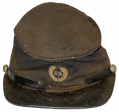
AN ATTIC CONDITION UNION STAFF OFFICER'S FORAGE CAP
This one has a great look of age and righteousness! The cap is based on the US Model 1858 forage cap, later to be known as a "Bummer's Cap". Made of navy-blue wool broadcloth it is 6 inches high up… (1273-89). Learn More »
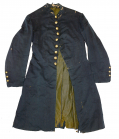
CIVIL WAR UNION CAVALRY LINE OFFICER’S FROCK COAT
This is a regulation Civil War Union cavalry officer’s coat as worn by company or “line” officers: Captains, First Lieutenants, and Second Lieutenants, as indicated by the single-breasted… (1316-07). Learn More »
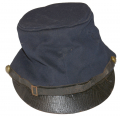
MCDOWELL PATTERN OFFICER’S OR PRIVATE PURCHASE FORAGE CAP
The “McDowell” cap was popularized early in the war by General Irwin McDowell (1818-1835,) who was perhaps a more inspiring in haberdashery than generalship. The style is characterized by a tall… (1316-11). Learn More »
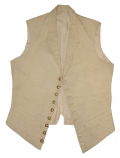
CIVIL WAR CAVALRY OFFICER’S WHITE VEST
A very strong example of a Civil War officer’s white vest, seen in photos alongside blue vests as well, part of any well-dressed officer’s uniform, if not always shown off for the camera. This is… (1316-09). Learn More »
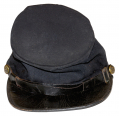
A SCARCE UNION RIFLEMAN'S HIGH CROWNED KEPI
This rare piece of headgear just came out of a hidden hoard of militaria in Boston. All the items were collected for decades exclusively within the State of Massachusetts. Our "in house" restorer… (1273-80). Learn More »
$2,500.00
ON HOLD
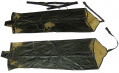
PAIR OF RARE, FULL LENGTH, WATERPROOF, INDIA-RUBBER RIDING LEGGINGS
This remarkable article of clothing from the mid 19th century is a set of India-rubber ‘leggins or leggings”. Each of the two, individual waterproof ‘leggings’ is constructed with medium-gauge… (381-25). Learn More »
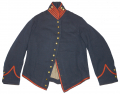
NICE CONDITION, SMALL SIZE UNION ARTILLERY SHELL JACKET
Standard issue dark blue wool shell jacket with bright red piping on collar, cuffs, and with red trim down the front and along the edges. Jacket has 12 General Service eagle buttons down the front… (2026-1342). Learn More »
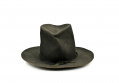
GREAT LOOKING CIVIL WAR HARDEE HAT SOLDIER-MODIFIED TO A CAMPAIGN HAT
This hat has a lot of character! Although the Army had issued a forage cap in 1839, the closest it came to issuing a real campaign hat until after the Civil War was the Voltigeur or Andrews hat of… (1273-50). Learn More »
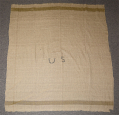
CIVIL WAR ISSUE BLANKET WITH UNUSUAL BLUE “US”
This issue blanket measures approximately 71” wide and 83” long, making it just a tad larger than a sampling of eighteen blankets made for the Columbia Rifles Research Compendium, which ranged… (1273-63). Learn More »
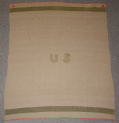
STENCIL ID’D CIVIL WAR ISSUE BLANKET WITH CORPS BADGES
This Civil War US issue blanket is in excellent condition, retains its original gray color to the body and the black color in the end stripes, along with its three-line open ended, chainstitched US… (1273-60). Learn More »
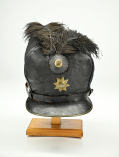
RARE BOSTON, MASSACHUSETTS DRAGOON HELMET
This item is a circa 1820 Boston Militia Dragoon Helmet, a very unique & rare tarred leather helmet (patterned after the US Regulation Dragoon Helmet of May 1833). A very finely constructed… (1273-108). Learn More »
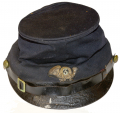
3RD INFANTRY OFFICER’S MCDOWELL CAP
A very good looking Union infantry officer’s cap in about excellent condition with strong blue color, tight seams, only three small moth nips, its original embroidered bullion 3rd Infantry Regiment… (1273-82). Learn More »
$4,250.00
ON HOLD
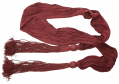
WAR OF 1812 CRIMSON OFFICER’S SASH
This sash is a regulation crimson officer’s sash made of silk net complete with knots and tassels. The sash is in very good condition with only minor wear to the fringe and the sash itself. There… (1273-57). Learn More »
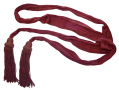
CIVIL WAR CRIMSON OFFICER’S SASH
This sash is a regulation crimson officer’s sash made of silk net complete with Turk's-head knots and tassels. The sash is in good condition with minor wear to the fringe. There are a few snags to… (1273-56). Learn More »
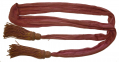
CIVIL WAR CRIMSON OFFICER’S SASH
This sash is a regulation crimson officer’s sash made of silk net complete with Turk's-head knots and tassels. The sash is in fair condition with minor wear to the fringe. There are a few snags to… (1273-54). Learn More »
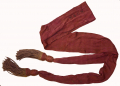
CIVIL WAR CRIMSON OFFICER’S SASH WITH INITIALS “W.E.C.W.”
This sash is a regulation crimson officer’s sash made of silk net complete with Turk's-head knots and tassels. The sash is in good condition with minor wear to the fringe. There are a few snags to… (1273-55). Learn More »
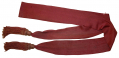
CIVIL WAR CRIMSON OFFICER’S SASH
This sash is a regulation crimson officer’s sash made of silk net complete with Turk's-head knots and tassels. The sash is in good condition with minor wear to the fringe. There are a few snags to… (1316-08). Learn More »
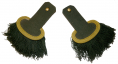
CIVIL WAR US IMPORT FRENCH CHASSEUR EPAULETS: 18th MASS AND OTHERS
These green and yellow epaulets were part of the 10,000 unforms ordered in Summer 1861 by the US government from the French firm of Godillot to alleviate uniform shortages and test the usefulness of… (149-44). Learn More »
$425.00
Originally $475.00
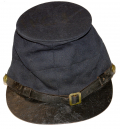
EXCELLENT CIVIL WAR “TYPE-1” REGULATION ISSUE FORAGE OR “BUMMER” CAP BY L.J. & I. PHILLIPS
This is a top-notch, excellent condition, original Civil War Union army regulation Model 1858 forage cap, complete, with strong color, virtually no moth damage, and still carrying its original makers… (1273-32). Learn More »
$2,950.00
ON HOLD
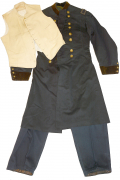
BRIGADIER GENERAL’S FROCK COAT, VEST AND TROUSERS OF BREVET BRIGADIER GENERAL JOHN FOWLER RUSLING: 5th NEW JERSEY, 2nd NJ BRIGADE, DIVISION AND CORPS STAFF DUTY IN THE EASTERN AND THE WESTERN THEATRES
John Fowler Rusling (1834-1918) served in the 5th New Jersey Infantry and the Second New Jersey Brigade before moving up to posts at the division and higher levels in the Army of the Potomac and then… (2024-1173). Learn More »
$12,500.00
SOLD
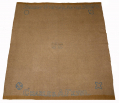
OUTSTANDING ISSUE BLANKET WITH SOLDIER ART ID'D TO 1ST MASSACHUSETTS INFANTRYMAN
This is a standard Federal issue blanket that has been cut down by the soldier and decorated with corps badges, his name and where he was at the time he applied the decoration. There is a lot to cover… (1179-468). Learn More »
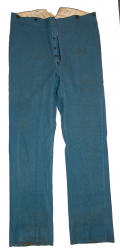
INDIAN WAR PERIOD TROUSERS
These trousers are likely a private purchase or state issue, following somewhat the 1884 US pattern in the renewed use of side-seam pockets, and the slightly darker shade of sky-blue introduced about… (801-581). Learn More »
$850.00
SOLD
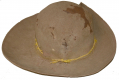
A CONFEDERATE CAVALRYMAN'S SLOUCH HAT FROM THE GETTYSBURG CAMPAIGN
This wonderful hat, probably a trooper's but perhaps an officer's, was found very recently in the town of Dover in south central Pennsylvania. Dover, near both York and Hanover Pennsylvania, witnessed… (1310-01). Learn More »
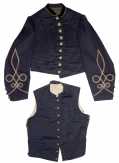
DASHING UNION CAPTAIN’S SHORT JACKET AND VEST
A very good example of short, non-regulation style popular among officers, both foot and mounted, for comfort and for style, for which the officer who wore this one had a flair. (“Shades of… (1314-02). Learn More »
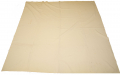
CIVIL WAR BLANKET
Blankets were items of military issue during the Civil War, but the wave of new volunteers both north and south overwhelmed recruiting services who scrambled to acquire and issue anything suitable… (1314-03). Learn More »
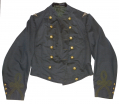
BEAUTIFUL OFFICER’S SHELL JACKET OF COLONEL, LATER BREVET BRIG. GEN. WINSOR B. FRENCH 77th NEW YORK
This officer’s shell jacket was worn by Winsor B. French while Colonel of the 77th New York and carries his name in old brown ink on interior of the hanging loop inside the collar. Short jackets… (1314-06). Learn More »
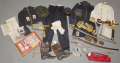
THE MILITARY EFFECTS AND MORE OF MAURICE LEYDEN, THIRD NEW YORK CAVALRY
This grouping came directly from the Leyden family in 1998 and within a few months was in the Ray Richey collection. Maurice Leyden was 22 years of age when he enrolled at Syracuse in the military… (1268-777). Learn More »
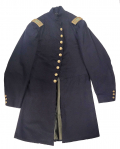
CIVIL WAR INFANTRY CAPTAIN’S COAT WITH RIFLEMEN BUTTONS
Line officers, who were posted in regimental line of battle to supervise their companies, were instantly recognizable by their single-breasted coats. This very good condition example bears the… (1314-05). Learn More »
$7,500.00
ON HOLD
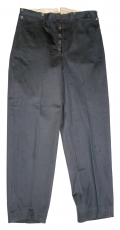
CIVIL WAR GENERAL OFFICER’S TROUSERS
These trousers comport with Article 51, Section 1468 of the US Army 1861 Uniform Regulations: “For General Officers and Officers of the Ordnance Department – dark blue cloth, plain, without… (1314-01). Learn More »
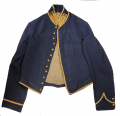
UNION CAVALRY SHELL JACKET
Standard issue dark blue wool shell jacket with yellow piping on collar and cuffs with yellow trim down the front and along the edges. Jacket has 12 General Service eagle cuff buttons down the front… (1179-496). Learn More »
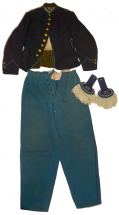
22ND NYNG CHASSEUR-STYLE JACKET, EPAULETS, AND TROUSERS
This appealing uniform jacket, epaulets, and trousers came to us from the same source as the identified gray full-dress frock coat from the 22nd NYNG that we listed previously. That coat is identified… (410-913). Learn More »
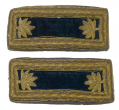
DOUBLE ROW MAJOR OF STAFF SHOULDER STRAPS
A very good pair of Civil War officer’s shoulder straps with gold oak leaves of a Major set on a black velvet ground indicating a staff appointment, likely at the brigade or higher level, (though… (1311-17). Learn More »
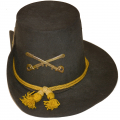
CAVALRY TROOPER'S HARDEE HAT
This is perhaps the showiest piece of Civil War headgear out there- the plumed Model 1858 Army Hat, better known by its nicknames as the Hardee or Jeff Davis hat. Derived from the pattern adopted by… (490-7360). Learn More »
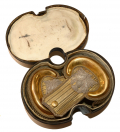
DRESS EPAULETTES IN TIN CASE – 42ND HIGHLAND INFANTRY (BLACK WATCH)
Pair of beautiful dress, bullion epaulettes in their tin carrying case. Epaulette upper-surfaces feature beautiful, bright gilt ribbed material with a single row bullion border, gilt brass outer… (1252-11). Learn More »
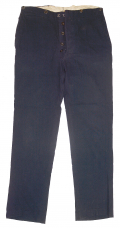
DARK-BLUE US LATE INDIAN WAR ERA TROUSERS
Trousers are constructed of a fine dark blue wool broadcloth with vertical side-seam pockets and a watchpocket in the waist. Trousers are held closed by a large hook and eye at the top of the waist… (2025-2067). Learn More »
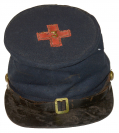
REGULATION UNITED STATES ARMY FORAGE CAP ID’D TO A REGIMENT THAT WON SIX MEDALS OF HONOR
The 3rd Vermont Infantry regiment was a three-years infantry regiment in the Union Army during the Civil War It served in the eastern theater, predominantly in the 6th Corps, Army of the Potomac,… (1179-405). Learn More »
$3,950.00
ON HOLD

U.S. INFANTRY PATTERN 1872 SHOULDER AIGUILLETTES (CORDS)
The “Pattern 1872 Aiguillettes” showcases the design elements characteristic of the period, including elaborate braiding and detailed finishes for dress uniforms. This aiguillette is light blue to… (490-2973). Learn More »
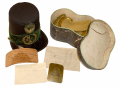
EYE-CATCHING 1859-1861 VIRGINIA MILITIA GROUPING OF CAPT. J.Q.A. NADENBOUSCH, BERKELEY BORDER GUARDS, LATER COLONEL 2nd VA INFANTRY OM RECOMMENDATION OF LEE AND STONEWALL JACKSON
An historic and eye-catching Virginia officer’s group belonging to John Quincy Adams Nadenbousch while Captain of the “Berkeley Border Guards,” a militia company raised in response to the John… (2025-3677). Learn More »
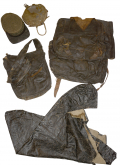
RARE MAINE GRAY FORAGE CAP; STENCILED HAVELOCK RAIN COVER AND STENCILED KNAPSACK; US HAVERSACK AND CANTEEN: PERLEY WHITTIER CO. K 24th MAINE
This grouping from Perley Whittier of the 24th Maine includes some very scarce material and his gray forage cap with Maine buttons on the chinstrap is downright rare. With this is his privately… (1179-229). Learn More »
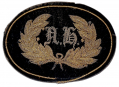
EXTREMELY SCARCE NEW HAMPHIRE OFFICER’S FALSE EMBROIDERED HAT INSIGNIA
Regular army officers had been authorized a silver “U.S.” within a gold bullion wreath for wear on their undress caps in 1839. This was carried over in the 1851 regulations for use on the 1851… (2020-912). Learn More »
$975.00
Originally $1,295.00
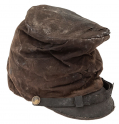
A McDOWELL PATTERN U.S. FORAGE CAP (MODEL 1858) WITH STAFF OFFICER SIDE BUTTONS, EXCAVATED AT FORT PEMBINA
Browned (faded from original dark blue) wool broadcloth body over buckram; leather visor and bound brim; black leather chinstrap with small rectangular buckle; gilt staff‑officer eagle buttons… (2025-3682). Learn More »
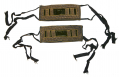
DOUBLE-BORDER STAFF CAPTAIN’S STRAPS WITH TIES
A higher quality set of embroidered bullion shoulder straps for a staff captain. These use a double border of two rows of embroidered bullion and two rows for each of the rank bars as well. Both are… (1299-24). Learn More »
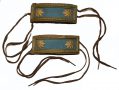
SCARCE SMITH PATENT INFANTRY MAJOR’S STRAPS WITH 1861 PATENT MARKINGS AND TIES
This is a good set of Smith patent infantry major’s shoulder straps, showing some use, but retaining good color, rubbed but legible red-ink patent markings on the reverse, and lace ties in place.… (1299-19). Learn More »
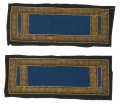
EXCELLENT CONDITION INFANTRY FIRST LIEUTENANT SHOULDER STRAPS
This set of Civil War shoulder straps has a lot of eye appeal. The wool centers are a bright, medium blue with no moth tracks, damage or fading. The single row embroidered bullion borders and rank… (1299-03). Learn More »
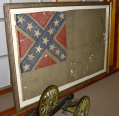
RARE CONFEDERATE SECOND NATIONAL / NAVAL ENSIGN
This Second National pattern Confederate flag precisely fits the dimensions for a Confederate Naval Ensign laid out by CS Secretary of the Navy Stephen Mallory on May 26, 1863, which specify a… (1268-661). Learn More »
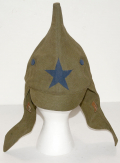
RARE CAVALRY HAT, A PRODUCT OF THE RUSSIAN REVOLUTION
A budenovka or budyonovka is a distinctive type of hat, an archetypal part of the Communist military uniforms of the Russian Civil War (1917-1922) and later conflicts. Its official name was the… (1285-04). Learn More »
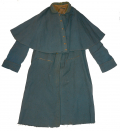
SCARCE, IDENTIFIED AND SOLDIER-MODIFIED ISSUE INFANTRY OVERCOAT: EMANUEL CAVE CO. H 69th OHIO, WIA MISSIONARY RIDGE
This regulation issue infantry overcoat was brought home by Emanuel Cave. Co. H, 69th Ohio, descended directly in the family to a great-grandson along with Cave’s knapsack and canteen, comes with… (1268-273). Learn More »
$6,500.00
ON HOLD
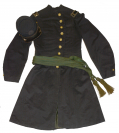
REGULATION FROCK COAT, CAP, AND GREEN MEDICAL SASH OF ASST. SURGEON ELIAS WILDMAN 40th NEW JERSEY
This identified Union Army Assistant Surgeon’s group came out of the family and was in a respected Las Vegas uniform collection for about 25 years until its acquisition by the Texas Civil War… (1268-751). Learn More »
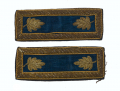
VERY STRONG EXAMPLES OF SCARCE EMBROIDERED BULLION INFANTRY MAJOR SHOULDER STRAPS
Infantry majors, like the other field grade regimental officers were combat officers, serving under fire in the front lines, and with only one major to thirty line officers, their shoulder straps are… (1299-21). Learn More »
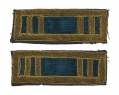
INFANTRY CAPTAIN SHOULDER STRAPS
A very good set of infantry captain’s single-border, embroidered bullion shoulder straps. These show moderate signs of age and use, but pleasing color overall, with some moth damage that is confined… (1299-23). Learn More »
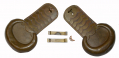
NON-EXCAVATED CIVIL WAR SHOULDER SCALES
This is a good, untouched, non-excavated pair of Civil War US army issue enlisted man’s shoulder scales showing a fairly even, aged patina to the brass, with a few shallow dings and just one small… (2025-2648). Learn More »
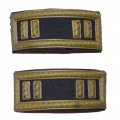
SMITH PATENT SHOULDER STRAPS – STAFF CAPTAIN
A very good condition and good-looking set of Smith Patent shoulder straps for a Captain on staff duty. There were at least a couple of patents during the Civil War for some form of metallic border in… (1299-16). Learn More »
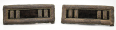
STAFF CAPTAIN’S SHOULDER STRAPS
A very good set of Civil War Captain’s shoulder straps. These are a nicely made pair with the center ground made of velvet and the base material not only turned over on the back, but also given a… (1299-07). Learn More »
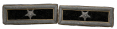
CIVIL WAR BRIGADIER GENERAL SHOULDER STRAPS
Civil War brigadier generals were not relegated to background positions, but held field commands, leading brigades, usually four or five regiments, under fire, with a commensurate mortality rate. This… (1299-06). Learn More »
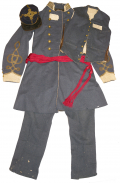
A CONFEDERATE CAPTAIN'S (ACTING MAJOR'S) UNIFORM GROUP, EDWARD CLIFTON WHARTON
Offered is an outstanding uniform ensemble consisting of a frock coat, a vest, a high crowned kepi, a pair of pants and a sash. These belonged to Edward Clifton Wharton Acting Quarter Master CS Army… (1268-062). Learn More »
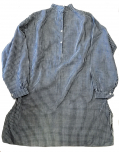
CIVIL WAR NAVY SEAMAN’S BLUE AND WHITE PLAID COTTON SHIRT OF JOSEPH DUFFY, USS PORT ROYAL 1862-1865, NORTH ATLANTIC BLOCKADING SQUADRON
Blue and white shirt of Civil War US Ordinary Seaman Joseph Duffy, formerly on display at the Texas Civil War Museum. A stencil identified pair of white duck trousers belonging to Duffy are also… (1268-1167). Learn More »
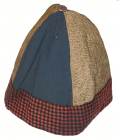
CIVIL WAR SMOKING CAP OF JOHN F. CROSSMAN, 36th MASSACHUSETTS
Formerly in the collections of the Texas Civil War Museum, this is a great piece for a display focused on Civil War army camp life- an identified Massachusetts soldier’s “smoking cap.” These… (1179-342). Learn More »
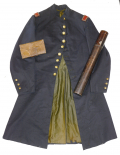
ARTILLERY 2nd LIEUTENANT’S FROCK COAT, COMMISSION TIN, AND BILLFOLD OF LT. A. T. MCMILLAN (MACMILLAN) BATTERY C 1st RHODE ISLAND LIGHT ARTILLERY
This artillery officer’s group was on display in the Texas Civil War Museum and consists of regulation Union artillery officer’s frock coat, the japanned tin tube that held his officer’s… (1268-547). Learn More »
$5,500.00
SOLD
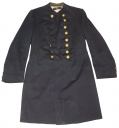
INDIAN WARS PERIOD FROCK COAT WITH CIVIL WAR STYLING
This double-breasted, dark blue officer’s-style frock coat shows some Civil War styling indicating it might have been made for a veteran or perhaps for a militia unit that retained older, more… (36-106). Learn More »
$950.00
ON HOLD
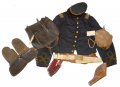
AN ASSEMBLAGE BOTH WAR AND POST WAR OF A GETTYSBURG "WOLVERINE” – WILLIAM H. DUNN, 5TH AND 10TH MICHIGAN CAVALRY
William H. Dunn of Ganges, Michigan served in both the 5th and 10th Michigan Cavalry during the Civil War. He enlisted on Aug. 14, 1862 in Co. "I" 5th Michigan Cavalry. At Gettysburg Dunn, a trooper… (1268-779). Learn More »
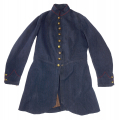
IDENTIFIED FIELD-USED AND SOLDIER MODIFIED SCHUYLKILL ARSENAL MARKED HEAVY ARTILLERY ENLISTED FROCK COAT OF S.H. YAHRES, 5th PA HEAVY ARTILLERY
This Civil War Pattern 1858 uniform coat worn by a heavy artilleryman while serving as infantry has a great deal of character- good overall condition and color, but legitimate age in the darker tone… (1268-543). Learn More »
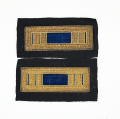
LIKE NEW CONDITION CIVIL WAR DOUBLE-BORDER INFANTRY CAPTAIN SHOULDER STRAPS
These Civil War infantry captain’s shoulder straps are as new condition as one could ever hope to find. Officers had to purchase their own uniforms, insignia, weapons and gear and these look pretty… (1299-12). Learn More »
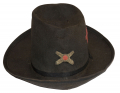
SLOUCH HAT OF ARTILLERY OFFICER A.N. PARSON'S VI (6th) CORPS ARMY OF THE POTOMAC
This slouch hat has "IT", that is the look and feel of a hat worn in combat. The owner Lieutenant to Captain Augustine N. Parsons saw plenty of that in the 1st New Jersey Light Artillery, Battery… (1268-546). Learn More »
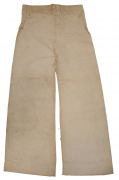
CIVIL WAR NAVY SEAMAN’S WHITE DUCK TROUSERS OF JOSEPH DUFFY, USS PORT ROYAL 1862-1865, NORTH ATLANTIC BLOCKADING SQUADRON
Stencil-identified Civil War US Navy white duck trousers of Ordinary Seaman Joseph Duffy, formerly on display at the Texas Civil War Museum. The Navy played a key role in the Civil War, enforcing the… (1268-667). Learn More »
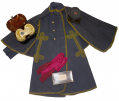
PROMOTED CAPTAIN ON THE SPOT ON THE BATTLEFIELD OF BENTONVILLE - THE EFFECTS OF DWIGHT DIVINE
This grouping includes a Kepi, a greatcoat, a sash and a pair of "full dress" epaulettes all belonging to 2nd Lieutenant to Major Dwight Divine, 143rd New York Infantry. For the history of the 143rd… (1268-309). Learn More »
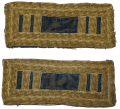
CIVIL WAR DOUBLE ROW CAPTAIN OF INFANTRY SHOULDER STRAPS
A good set of Civil War embroidered bullion officer’s shoulder straps for a Captain of infantry. As with all officer material they would be privately purchased by the officer from a military goods… (490-7389). Learn More »
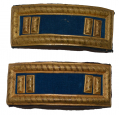
SMITH PATENT CAPTAIN OF INFANTRY SHOULDER STRAPS
A great looking set of Smith patent shoulder straps for a Captain of infantry, showing medium blue velvet centers with good color and surface, and muted, but strong gilt to the single row borders and… (490-7379). Learn More »
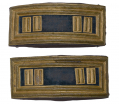
DOUBLE BORDER SMITH PATENT CAPTAIN OF INFANTRY SHOULDER STRAPS
A very good set of Smith patent shoulder straps, showing just appropriate age and wear. The borders and rank bars show some rubbing to the gilt finish and consequent slight darkening with some stains… (490-7378). Learn More »
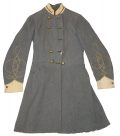
A RARE REGULATION IDENTIFIED CONFEDERATE CAVALRY OFFICER'S FROCK COAT AND SERVICE REVOLVER: WILLIAM P. BOHANNON, 5TH VIRGINIA CAVALRY
This coat and side arm came to light in an estate sale held by the Bohannon family in Mechanicsville, Virginia in 1974. The Bohannon family goes back centuries in this country and is still well… (1268-369). Learn More »
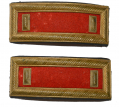
SMITH PATENT FIRST LIEUTENANT OF ARTILLERY SHOULDER STRAPS
These Civil War officer’s shoulder straps are in great condition and have strong color. These are for a First Lieutenant of artillery, having a red wool ground, with a single rank bar at either end… (490-7383). Learn More »
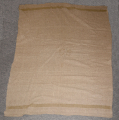
REGULATION CIVIL WAR US ARMY ISSUE BLANKET IN AMAZING CONDITION
These wool blankets were an essential piece of a Union soldier's gear. This one is full length and unaltered. It measures 66 inches wide by 80 inches in length. The ends are finished on the sides, and… (2025-1850). Learn More »
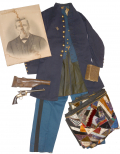
THIRD VERMONT INFANTRY NCO'S UNIFORM GROUPING
The offering consists of not only a federal soldier's frock coat, vest and trousers but a revolver, a corps badge and a host of personal items wartime and postwar. William W. Hendrick from Concord… (1268-270). Learn More »
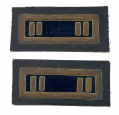
CIVIL WAR EMBROIDERED BULLION INFANTRY CAPTAIN SHOULDER STRAPS
A very good, unused set of infantry captain’s shoulder straps. These retain their black enameled paper backs showing some minor losses, but no indication of having been turned under to sew them to… (490-7380). Learn More »
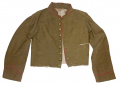
CONFEDERATE ENLISTEDMAN'S ARTILLERY SHELL JACKET
This is a very fine identified Confederate shell jacket, allegedly worn by Private Edwin F. Barnes, 1st Company, Virginia Howitzers, Light Artillery, the famous Richmond Howitzers. Barnes initially… (2025-1796). Learn More »
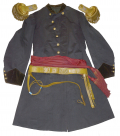
FROCK COAT, SASH, EPAULETS AND SWORD BELT OF COLONEL AND BREVET BRIGADIER GENERAL ELI HOUSTON MURRAY, 3rd KENTUCKY CAVALRY
This set consists of a wonderful, identified Union cavalry colonel’s frock coat, epaulets, sash and sword belt, all in excellent condition and belonging to Col. E.H. Murray, 3rd Kentucky Cavalry,… (1268-783). Learn More »
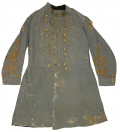
TEXAN RICHARD M. GANO'S BRIGADIER GENERAL'S UNIFORM
Offered is the uniform Colonel/General Gano wore when he was wounded in battle. Most Confederate uniforms around today were not there, or they did not see "the elephant" (battle). Usually these are… (1268-368). Learn More »
$105,000.00
ON HOLD
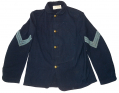
CIVIL WAR INFANTRY SERGEANT’S FOUR-BUTTON FATIGUE BLOUSE
This is a very good example of a very rare Civil War uniform: the 4-button blouse originally designated for “fatigue” wear in the regular army, but which quickly became the standard field uniform… (1268-268). Learn More »
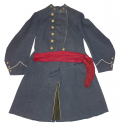
THE FROCK COAT AND SASH OF COLONEL WILLIAM McCOMB, 14TH TENNESSEE INFANTRY – WIA SHARPSBURG & CHANCELLORSVILLE
William McComb was a Pennsylvanian by birth. At the age of 26 he moved to Tennessee here he engaged in business. When the Civil War began he enlisted in the 14th Tennessee Infantry soon rising to a… (1268-047). Learn More »
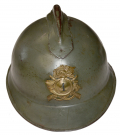
WW1 ITALIAN HELMET – BULLET OR SHRAPNEL STRUCK?
A very good example of the Italian World War One helmet, modeled on the French M1915, but made just two pieces- the bowl and comb- and welded together rather than riveted. This shows some field wear… (1202-697). Learn More »
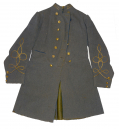
IDENTIFIED CONFEDERATE OFFICER'S FROCK COAT WITH EXTRAORDINARILY RARE BUTTONS
Offered is the uniform coat of 2nd/1st Lieutenant John Calhoun Clemson. This fine frock coat has 20 rare "CS Palmetto Guards" overcoat and cuff buttons (SC17). John Calhoun Clemson was the grandson of… (1268-056). Learn More »
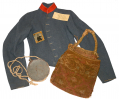
IDENTIFIED CONFEDERATE "TAIT TYPE" JACKET
This is a rare, published, artillery shell jacket made by Peter Tait of Ireland. It was run through the Union Blockade for the Confederacy. We will present this offering in 5 parts: 1) The Tait story.… (1268-552). Learn More »
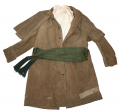
A CONFEDERATE SURGEON'S GREATCOAT, SASH AND SHIRT
Dr. J. P. Rasser was contracted by the Confederacy and among his duties in Georgia was the examination of Conscripts for the Army. THE OVERCOAT or army great coat is certainly "Homespun" that is a… (1268-706). Learn More »
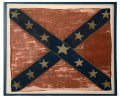
MORTON’S BATTERY FLAG OF FORREST’S CAVALRY: EX-GUNTHER COLLECTION, CHICAGO HISTORICAL SOCIETY, & TEXAS CIVIL WAR MUSEUM
This is one of two wartime Confederate flags flown by Capt. John W. Morton consecutively as guidons for his battery or simultaneously with one likely as the battery flag and the other as a personal or… (1286-621). Learn More »
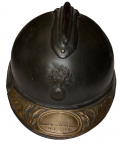
WW1 FRENCH HELMET WITH VETERAN’S PLAQUE
A very clean example of the French M1915 Adrian helmet with very strong paint, comb and RF/bomb plate in place, as well as liner and chinstrap (detached on one end) and carrying an excellent example… (1202-705). Learn More »
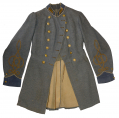
CLOSE TO REGULATION VIRGINIA CONFEDERATE CAPTAIN'S FROCK COAT
The coat is made of mid- gray wool, possibly imported from England. It has full-length skirts ending in the typical and desirable raw edge. The sleeves have an 8 1/2-inch billow at the elbow. The dark… (1268-060). Learn More »
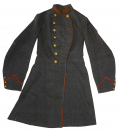
A LOUISIANA CONFEDERATE ARTILLERY CAPTAIN'S FROCK COAT
This is an outstanding example that was until recently in the Fort Worth Texas Civil War Museum. The coat is double breasted and made of a dark gray wool satinet. There are seven Louisiana state… (1268-557). Learn More »
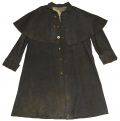
A RARELY SEEN CONFEDERATE INFANTRYMAN'S GREATCOAT
Once in the famed museum collection of Ray Richey, this Confederate mid-gray infantry overcoat or greatcoat is all original and in very good condition all things considered. The hand sewn overcoat is… (1268-043). Learn More »
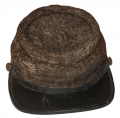
A FINE EXAMPLE OF A CONFEDERATE INFANTRYMAN'S KEPI
This cap's crown, top and base band are made from a medium weight open weave woolen fabric which may be a blend of sorts. It certainly looks "home spun". The kepi gives indications of being a depot… (1268-037). Learn More »
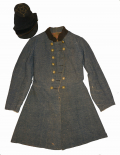
A BEYOND RARE CS ARKANSAS FROCK COAT AND "BONNET DE POLICE"
Mr. Ray Richey, owner of the Texas Civil War Museum, purchased this uniform coat and hat directly from an Arkansas estate in 2003. Twenty-six years prior to this it was acquired from the Beneux… (1268-057). Learn More »
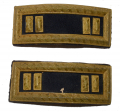
NICELY MARKED SMITH PATENT CAPTAIN OF STAFF SHOULDER STRAPS
A very good condition and good looking set of Smith Patent shoulder straps for a Captain on staff duty. There were at least a couple of patents during the Civil War for some form of metallic border in… (490-7268). Learn More »
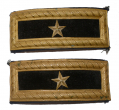
CIVIL WAR BRIGADIER GENERAL SMITH PATENT SHOULDER STRAPS
An excellent condition set of Smith Patent shoulder straps for a Brigadier General. James Smith’s patent used stamped and gilded brass metallic frames to imitate the bullion embroidered borders of… (490-7265). Learn More »

ZOUAVE FIRST SERGEANT CHEVRONS
These chevrons measure about 8 inches wide and 4 inches tall and use a red ground with three narrow, sewn, medium blue stripes and a diamond/lozenge, indicating a First Sergeant, the senior… (490-7153). Learn More »
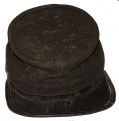
CONFEDERATE DEEP SOUTH DEPOT ENLISTEDMAN'S KEPI
Federal soldier George Wilson, 21st Missouri Infantry (US), captured this cap at the Fort Blakely fight near Mobile, Alabama April 9th, 1865. The cap appears to have been mass produced at a clothing… (2025-300). Learn More »
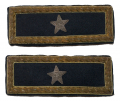
BRIGADIER GENERAL’S SHOULDER STRAPS
A very nice condition pair of Civil War period Brigadier General’s shoulder straps showing signs of actually having been worn on a uniform. These measure 1-1/2” wide by 3-7/8” long and are… (2025-278). Learn More »
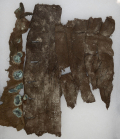
PIECE OF AN INDIAN WAR M1872 FATIGUE BLOUSE FROM FORT PEMBINA, ND
This is a portion of a rare Model 1872 fatigue blouse clearly showing the characteristic pleats of the pattern. These were replacements for the old Civil War M1858 fatigue blouse (the 4-button sack… (1052-579). Learn More »
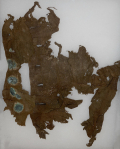
PIECE OF AN INDIAN WAR M1872 FATIGUE BLOUSE FROM FORT PEMBINA, ND
This is a portion of the rare Model 1872 fatigue blouse. The pattern was a replacement for the old Civil War M1858 fatigue blouse (the 4-button sack coat,) made with the idea of giving the soldier… (1052-578). Learn More »
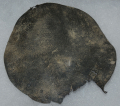
KEPI OR DRESS CAP STIFFENER FROM FORT PEMBINA
This comes from the excavations at Fort Pembina, ND, a small frontier army post in operation from 1870 to 1895, and is the stiffener from inside the top of a kepi a M1872 dress cap. It is black in… (1052-1152). Learn More »
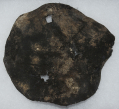
KEPI OR DRESS CAP STIFFENER FROM FORT PEMBINA
This comes from the excavations at Fort Pembina, ND, a small frontier army post in operation from 1870 to 1895, and is the stiffener from inside the top of a kepi a M1872 dress cap. It is black in… (1052-475). Learn More »
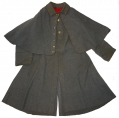
INDIAN WARS MOUNTED SERVICES GREATCOAT WITH NEW YORK BUTTONS AND MAKER MARKINGS
This unique military overcoat is of the post-Civil War Indian Wars period and features a unique pattern with New York State appointments. The piece seems to be something of a hybrid between the m1858… (490-7149). Learn More »
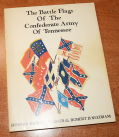
BOOK – THE BATTLE FLAGS OF THE CONFEDERATE ARMY OF TENNESSEE
By Howard Madaus & Robert Needham, published by the Milwaukee Public Museum in 1976. Soft cover, perfect bound, 152 pages, 8.5” x 11”. Heavily illustrated with line drawings of which some are… (1266-1055). Learn More »
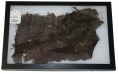
PIECE OF A U.S. FLAG FROM THE FRONTIER US ARMY FORT PEMBINA, NORTH DAKOTA
This piece of bunting comes from excavations at Fort Pembina, ND, conducted on private property with the owner’s permission, a fort established in 1870 by troops of the 20th US Infantry and… (1052-722). Learn More »
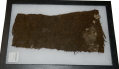
PIECE OF CIVIL WAR - INDIAN WAR FRONTIER US ARMY BLANKET FROM FORT PEMBINA, NORTH DAKOTA
This piece of a US Army military issue blanket comes from excavations at Fort Pembina, ND, conducted on private property with the owner’s permission, a fort established in 1870 by troops of the 20th… (1052-615). Learn More »
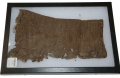
US ARMY SHIRT CUFF FROM FORT PEMBINA, NORTH DAKOTA
A relic from a small U.S. Army frontier post of the Indian Wars- part of a soldier’s shirt. This is the shirt cuff, still showing a small button near the corner, and a portion of the lower sleeve.… (1052-602). Learn More »
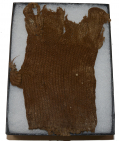
REMNANT OF SCARCE INDIAN WAR SOLDIER’S MITTEN FROM FORT PEMBINA, ND
This comes from the excavations at Fort Pembina, occupied 1870-1895, where cold weather in winter months might well be a concern. The army began issuing mittens in 1873. Before that men were left to… (1052-584). Learn More »
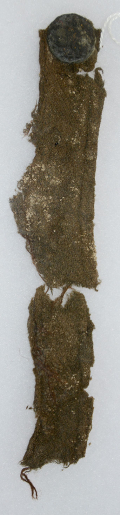
CIVIL WAR-INDIAN WAR UNIFORM COAT PIECE WITH BUTTON FROM FORT PEMBINA
This is part of the right lapel of a US army coat discarded by a soldier at Fort Pembina, ND, sometime between 1870 and 1895, and is from excavations in wet, anaerobic soil that has preserved leather… (1052-724). Learn More »
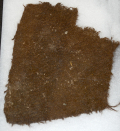
PIECE OF US ARMY BLANKET FROM FORT PEMBINA, NORTH DAKOTA
This piece of a US Army military issue blanket comes from excavations at Fort Pembina, ND, conducted on private property with the owner’s permission, a fort established in 1870 by troops of the 20th… (1052-616). Learn More »
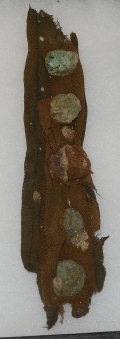
PIECE OF AN INDIAN WAR M1872 FATIGUE BLOUSE OR DRESS COAT FROM FORT PEMBINA, ND
This is a piece from the lapel of a US Army jacket showing part of the blue outer fabric, the lining and the remains of five corroded brass buttons. From the size and spacing of the buttons this is… (1052-608). Learn More »
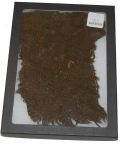
PIECE OF CIVIL WAR ARMY BLANKET FROM FORT PEMBINA, NORTH DAKOTA
The army had vast stocks of Civil War material left over at the end of the war. These supplies, along with the reduction of the postwar army meant U.S. troops were getting Civil War gear well into the… (1052-617). Learn More »
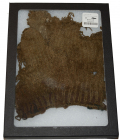
SCARCE INDIAN WAR SOLDIER’S MITTEN FROM FORT PEMBINA, ND
This comes from the excavations at Fort Pembina, occupied 1870-1895, where cold weather in winter months might well be a concern. The army began issuing mittens in 1873. Before that men were left to… (1052-620). Learn More »
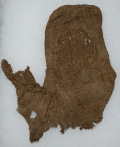
INDIAN WAR SOLDIER’S MITTEN FROM FORT PEMBINA, ND
This comes from the excavations at Fort Pembina, occupied 1870-1895, where cold weather in winter months might well be a concern. The army began issuing mittens in 1873. Before that men were left to… (1052-619). Learn More »
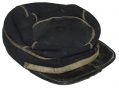
WONDERFUL CONDITION ORIGINAL CONFEDERATE-MANUFACTURED KEPI FOR A DRUMMER BOY OR CHILD
This article of uniform clothing is an original, Civil War example of headgear manufactured in the Confederacy and presented here in wonderful, original intact condition. The period artifact is a… (526-68). Learn More »
$4,750.00
Originally $6,500.00
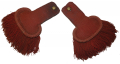
FINE PAIR OF RED EPAULETTES
Pair of red wool epaulettes with “eagle A” buttons. Epaulette outer-surfaces feature beautiful, woven red wool with a ribbed border, and thick rows of hanging tassels. A single eagle “A”… (1179-1652). Learn More »
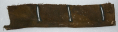
CIVIL WAR-INDIAN WAR UNIFORM LAPEL FROM FORT PEMBINA
This strip of cloth showing three buttonholes (and what seems to be part of a fourth) is the remnant of an army dress coat discarded after its useful days were done at Fort Pembina, a small frontier… (1052-610). Learn More »
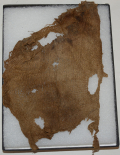
INDIAN WAR SOLDIER’S MITTEN PIECE FROM FORT PEMBINA, ND
This comes from the excavations at Fort Pembina, occupied 1870-1895, where cold weather in winter months might well be a concern. The army began issuing mittens in 1873. Before that men were left to… (1052-621). Learn More »
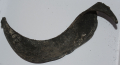
CIVIL WAR-INDIAN WAR FORAGE CAP VISOR
This is a well preserved leather visor from a forage cap recovered at Fort Pembina, ND, where it was preserved in remarkable condition by wet, anaerobic soil conditions. This is typical of the simple… (1052-485). Learn More »
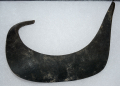
CIVIL WAR-INDIAN WAR FORAGE CAP VISOR
This is a well preserved leather visor from a forage cap recovered at Fort Pembina, ND, where it was preserved in remarkable condition by wet, anaerobic soil conditions. This is typical of the simple… (1052-482). Learn More »
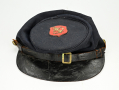
CIVIL WAR BUMMER OR FORAGE CAP WITH NINTH CORPS BADGE
This is an excellent example of an original Civil War Union army regulation Model 1858 Forage Cap with a Ninth Corps badge on top, displaying the cross cannon and fouled anchor reflecting the origins… (1052-143). Learn More »
$4,000.00
Originally $4,500.00
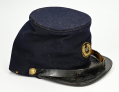
CIVIL WAR COMMERCIAL FORAGE CAP WITH MAINE BUTTONS AND ASSOCIATED INSIGNIA
Commercial caps were simply those purchased privately rather the issued by the government. They might more or less closely follow contract patterns with the purchaser able to suit his taste and… (1052-139). Learn More »
$4,000.00
Originally $4,500.00
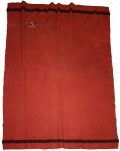
IDENTIFIED ISSUE RED BLANKET OF THEODORE P. BOWKER 13th MASSACHUSETTS - DIED OF WOUNDS AT ANTIETAM!
This is a rare, early-war, identified Massachusetts issue red blanket carried by a soldier in the 13th Massachusetts who was wounded at Antietam on Sept. 17, 1862, and died of those wounds at a U.S.… (490-7138). Learn More »
$6,500.00
Originally $7,500.00
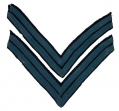
EXCELLENT PAIR OF CIVIL WAR FEDERAL INFANTRY REGULATION CORPORAL CHEVRONS/STRIPES
Union infantry companies fielded eight corporals. Along with the sergeants they might be charged with supervising squads or fatigue details, but in battle were posted in the front rank of the line of… (490-7163). Learn More »
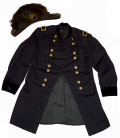
MINT IDENTIFIED BREVET BRIGADIER GENERAL’S FROCK COAT AND CHAPEAU OF ALONZO ALDEN
This sets consists of Brevet Brigadier General Alonzo Alden’s mint condition brigadier general’s frock coat with shoulder straps and his full dress “light French chapeau,” allowed for officers… (1179-156). Learn More »
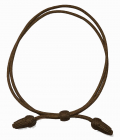
OFFICER’S GOLD TONE HAT CORD, ID’D TO COL. WILLIAMS, 9TH PA. CAVALRY
woven gold bullion cord, adjuster slide, and acorns. All in very fine condition. This has a verbal identification to Colonel Edward Williams, 9th Pennsylvania Cavalry. Author/historian Randy… (1256-108). Learn More »
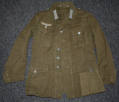
VETERAN BRING BACK GERMAN "AFRIKA CORPS" TUNIC
This enlistedman's open-collared field blouse is the style developed in 1940 in anticipation of deployment of German forces to North Africa under Irwin Rommel. This jacket of mid-brown canvas/cotton… (1235-453). Learn More »
$3,200.00
Originally $3,500.00
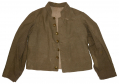
WORLD CLASS IDENTIFIED WOUNDED IN ACTION CIVIL WAR NORTH CAROLINA SOLDIER’S JACKET WITH BULLET HOLE FROM HIS WOUND AT THE WILDERNESS!
Formerly in the collections of the Texas Civil War Museum this world-class Confederate infantryman’s jacket worn by William B. Royal came directly out of the family in 2002, having been previously… (814-69). Learn More »
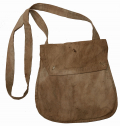
MASSACHUSETTS HAVERSACK
These smaller white canvas haversacks fastening with two bone buttons usually show up marked with an ink stamp as “inspected and accepted” by Massachusetts. This one was most likely so marked as… (2024-1382). Learn More »
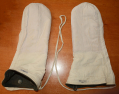
WWII GERMAN WINTER MITTENS
Mittens show little age and use wear. The string to hang them around your neck is still attached. The markings are on the white side and are a little blurry. The insides are feldrgrau [green grey]… (1235-152). Learn More »
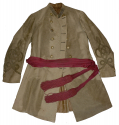
CONFEDERATE CAVALRY CAPTAIN’S FROCK COAT OF CAPT. EDWARD BIRD, “EFFINGHAM HUSSARS,” 2nd BATTALION AND 5th REGIMENT GEORGIA CAVALRY
This rare, identified, Confederate cavalry captain’s frock coat belonged to an officer who served from 1861 though 1865, rising from Captain to Colonel, with extensive action especially in… (1179-232). Learn More »
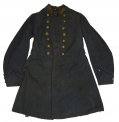
IDENTIFIED CONFEDERATE CAPTAIN’S FROCK COAT OF CAPTAIN PHARES WALDO SHEARER, 45th MISSISSIPPI, WITH 28-PAGE REMINSCENCES AND VETERAN’S BADGE- HE EXCHANGED SALUTES WITH THE WOUNDED JOHN BELL HOOD AT CHICKAMAUGA
This coat came directly out of the family along with a reunion badge and type-written copy of the officer’s 1906 reminiscences. The coat was formerly in the collection of Steve Mullinax, is… (1179-179). Learn More »
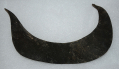
CIVIL WAR-INDIAN WAR FORAGE CAP VISOR
This is a well preserved leather visor from a forage cap recovered at Fort Pembina, ND, where it was preserved in remarkable condition by wet, anaerobic soil conditions. This is typical of the simple… (1052-480). Learn More »
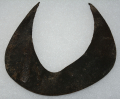
CIVIL WAR-INDIAN WAR FORAGE CAP VISOR
This is a well preserved leather visor from a forage cap recovered at Fort Pembina, ND, where it was preserved in remarkable condition by wet, anaerobic soil conditions. This is typical of the simple… (1052-483). Learn More »
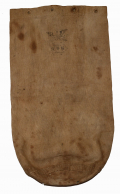
US NAVY SEAMAN’S DUFFEL BAG WITH EAGLE AND NAME
This seaman’s duffel bag, measuring about 23’ by 12 ½” when laid flat, was intended for personal clothing, etc., and has been personalized with a stenciled American eagle with outstretched… (1179-593). Learn More »
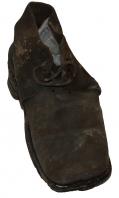
SCARCE CIVIL WAR ARMY ISSUE SHOE, A.K.A. BROGAN OR BOOTTEE
This Civil War US army issue shoe is typical wartime construction, using rough-side out black leather with reinforcing heel piece or “counter” sewn inside, four pairs of holes for a leather lace,… (1052-282). Learn More »
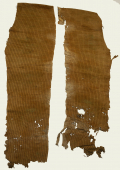
KNIT DRAWERS OR TROUSERS FROM FORT PEMBINA
These pieces are two legs from trousers or, more likely, drawers recovered in the excavations at Fort Pembina, ND, conducted on private property with the owner’s permission, where wet, anaerobic… (1052-446). Learn More »
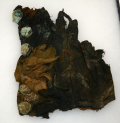
CIVIL WAR-INDIAN WAR UNIFORM COAT PIECE WITH BUTTONS FROM FORT PEMBINA
This comes from the right lapel of a US army coat discarded by a soldier at Fort Pembina, ND, sometime between 1870 and 1895, and is from excavations in wet, anaerobic soil that has preserved leather… (1052-580). Learn More »
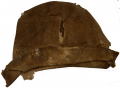
INDIAN WAR FIELD-USED CAMPAIGN HAT FROM FORT PEMBINA, NORTH DAKOTA
This is a real field-used Indian War campaign hat in relic condition excavated at Fort Pembina, ND, a small frontier army post in operation from 1870 to 1895. Anaerobic conditions of the dig have… (1052-253). Learn More »
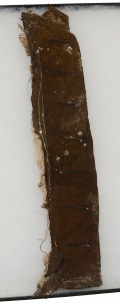
US ARMY DRESS COAT LAPEL FROM FORT PEMBINA, ND
This coat lapel comes from the left side of US army dress coat discarded by a soldier at Fort Pembina, ND, and was excavated in wet, anaerobic soil that has preserved leather and cloth in remarkable… (1052-589). Learn More »
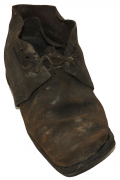
SCARCE CIVIL WAR ARMY ISSUE SHOE MADE AND MARKED BY CIVIL WAR CONTRACTOR JOHN MUNDELL OF PHILADELPHIA
This is a typical, though very scarce, Civil War issue army shoe made by a known contractor and marked by him on the inside of the ankle: “J. MUNDELL.” Mundell was born in Ireland in 1829, reached… (1052-298). Learn More »
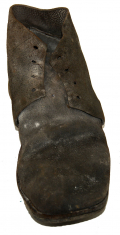
SCARCE CIVIL WAR ARMY ISSUE SHOE, A.K.A. BROGAN OR BOOTTEE
This Civil War US army issue shoe is typical wartime construction, using rough-side out black leather with reinforcing heel piece or “counter” sewn inside, four pairs of holes for a leather lace… (1052-285). Learn More »
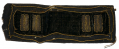
SINGLE SHOULDER STRAP FOR A CAPTAIN OF STAFF
Strap is made of dark blue cloth with a double row of dead bullion for a border. The rank field is of black velvet while the rank of captain is made of bars of heavy gold bullion thread. The underside… (460-1468). Learn More »
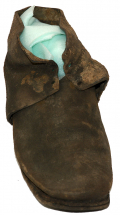
SCARCE CIVIL WAR ARMY ISSUE SHOE, A.K.A. BROGAN OR BOOTTEE
This Civil War US army issue shoe is typical wartime construction, using rough-side out black leather with reinforcing heel piece or “counter” sewn inside, four pairs of holes for a leather lace… (1052-300). Learn More »
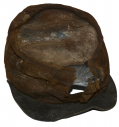
REGULAR ARMY CIVIL WAR ENLISTED KEPI WITH INDIAN WAR USE FROM FORT PEMBINA, NORTH DAKOTA
This Civil War enlisted man’s kepi comes from excavations at Fort Pembina, ND, conducted on private property with the owner’s permission. The fort was established in 1870 by troops of the 20th US… (1052-250). Learn More »
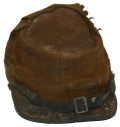
REGULAR ARMY CIVIL WAR ENLISTED KEPI WITH INDIAN WAR USE FROM FORT PEMBINA, NORTH DAKOTA
This Civil War enlisted man’s kepi comes from the excavations at Fort Pembina, ND, conducted on private property with the owner’s permission, and is in a remarkable state of preservation from the… (1052-252). Learn More »
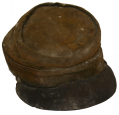
REGULAR ARMY MODEL 1872 KEPI FROM FORT PEMBINA, NORTH DAKOTA
This Model 1872 officer’s kepi comes from excavations at Fort Pembina, ND, conducted on private property with the owner’s permission. The fort was established in 1870 by troops of the 20th US… (1052-248). Learn More »
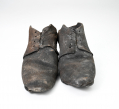
INDIAN WAR ARMY SHOES BY MUNDELL FROM FORT PEMBINA, ND
This pair of shoes is from the excavations at Fort Pembina, ND, and could be taken for attic or barn-finds, having been preserved by the wet, anaerobic soil conditions of the dig. They are solid, can… (1052-387). Learn More »
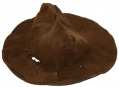
INDIAN WAR FIELD-USED CAMPAIGN HAT MADE FROM A CIVIL HARDEE HAT
This is a real field-used example of an Indian War US Army campaign hat made from a Civil War M1858 issue dress hat (the “Hardee” or “Jeff Davis” hat) that comes from the excavations at Fort… (1052-245). Learn More »
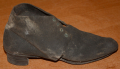
US INSPECTED ARMY SHOE FROM FORT PEMBINA, ND
This soldier’s shoe bears a partially visible stamp inside reading “INSPECTOR / NEW YORK,” indicating it is government issue and appears to be one of the experimental patterns of footwear tried… (1052-386A). Learn More »
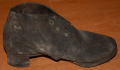
ARMY SHOE FROM FORT PEMBINA, ND
This soldier’s shoe is very similar to another found in the Fort Pembina excavations that has a partially visible US inspector’s mark and in construction differs only in having four sets of lace… (1052-386B). Learn More »
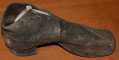
RARE MARKED CIVIL WAR ARMY ISSUE SHOE
Civil War army-issue shoes were among the most essential things issued to a soldier and about the rarest of Civil War items to survive despite being made literally in the millions. They were cheaply… (1052-596). Learn More »
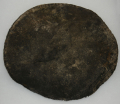
KEPI OR DRESS HAT STIFFENER FROM FORT PEMBINA
This comes from the excavations at Fort Pembina, ND, a small frontier army post in operation from 1870 to 1895, and seems to be the stiffener from inside the top of a kepi or dress hat. It is leather,… (1052-435). Learn More »
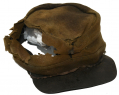
REGULAR ARMY CIVIL WAR ENLISTED KEPI WITH INDIAN WAR USE FROM FORT PEMBINA, NORTH DAKOTA
This Civil War enlisted man’s kepi comes from the excavations at Fort Pembina, ND, conducted on private property with the owner’s permission. The fort was established in 1870 by troops of the 20th… (1052-247). Learn More »
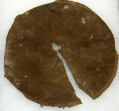
KEPI CROWN FROM AN INDIAN WARS US ARMY FRONTIER FORT
This crown from a soldier’s kepi comes from excavations at Fort Pembina, ND, and shows a small hole at center, from which extends a tear to one edge, with some edge wear and stains. The color has… (1052-432). Learn More »
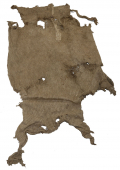
PIECE OF PRIVATE PURCHASE SOLDIER’S HIGH RIBBED KNIT SHIRT FORT PEMBINA, NORTH DAKOTA
Excavations at Fort Pembina in anaerobic soil conditions have yielded a number of expected and rare finds giving a glimpse of the material culture of a small US army frontier post during the Indian… (1052-1111). Learn More »
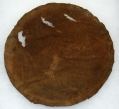
KEPI CROWN FROM FORT PEMBINA, NORTH DAKOTA
This crown from a soldier’s kepi comes from excavations at Fort Pembina, ND, and shows three oval holes and one small slit, with some edge wear and stains. The color has shifted from blue to brown,… (1052-430). Learn More »
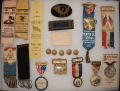
COLLECTION OF ITEMS BOTH WARTIME AND VETERAN IDENTIFIED TO 8TH IOWA INFANTRY OFFICER
This lot consists of item identified to Lieutenant Spencer Smith of Company A, 8th Iowa Infantry. Smith was born in Ogle County, Illinois on January 14, 1839 and relocated to Iowa with his family in… (460-1466). Learn More »
$995.00
Originally $1,100.00
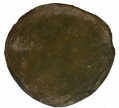
KEPI CROWN FROM FORT PEMBINA, NORTH DAKOTA
This crown from a soldier’s kepi comes from excavations at Fort Pembina, ND, and is in remarkably good condition, showing just one short tear, with no fabric missing, a good edge, and traces of blue… (1052-442). Learn More »
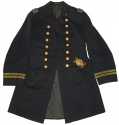
CIVIL WAR US NAVY LT. COMMANDER’S COAT AND BUCKLE OF ALEXANDER COLE RHIND - USS CONSTELLATION, USS CRUSADER, USS KEOKUK, FOUGHT CS BATTERIES AT DEEP BOTTOM, COMMANDED A “POWDER BOAT” AGAINST FT. FISHER, LATER REAR ADMIRAL
This is a very appealing regulation Civil War navy officer’s frock coat with interesting history. The coat is very dark blue, almost black, double-breasted with two rows of 9 US Navy officer’s… (1179-650). Learn More »
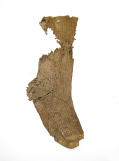
INDIAN WAR SOLDIER’S SOCK FROM FORT PEMBINA, ND
This comes from the excavations at Fort Pembina, ND, and appears to be the 1877 pattern army sock, which was medium gray in color, had white toes, and the weave of the heel running parallel with the… (1052-592). Learn More »
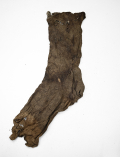
CIVIL WAR - INDIAN WAR SOCK FROM FORT PEMBINA, ND
This comes from the excavations at Fort Pembina, ND, a fort established in 1870 and in operation into the 1890s. The dig was conducted on private property with the owner’s permission and has yielded… (1052-581). Learn More »
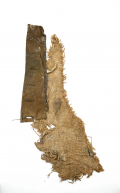
CIVIL WAR UNIFORM DRESS COAT LAPEL FROM FORT PEMBINA
These section of lapel and coat lining from a Civil War US army dress coat was discarded by a soldier at Fort Pembina, ND, where it was recently recovered from excavations in wet, anaerobic soil that… (1052-567). Learn More »
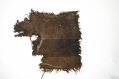
PIECE OF ARMY BLANKET FROM FORT PEMBINA, NORTH DAKOTA
This piece of a U.S. Army blanket comes from the excavations at Fort Pembina, ND, where wet, anaerobic soil conditions produced not only leather gear, but cloth in amazingly good condition. This shows… (1052-607). Learn More »
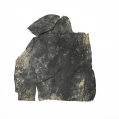
SCARCE CIVIL WAR PONCHO OR “GUM BLANKET” FRAGMENT
Civil War period ponchos and rubber blankets are extremely scarce despite being widely used and valued by troops in the field. They were so useful at home as to be used up by veterans and their… (1052-628). Learn More »
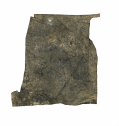
SCARCE CIVIL WAR INDIA RUBBER BLANKET OR PONCHO FRAGMENT
Excavated portion of a Civil War poncho or rubber blanket. This is a rough rectangle, preserving one edge with its binding intact and one of the brass grommets, with its diamond/square shaped… (1052-570). Learn More »
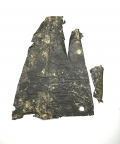
SCARCE CIVIL WAR INDIA RUBBER BLANKET OR PONCHO FRAGMENT
Excavated portion of a Civil War poncho or rubber blanket. This comes from the excavations at Fort Pembina in North Dakota, an army post garrisoned from 1870 to 1895. They were supplied at first with… (1052-568). Learn More »
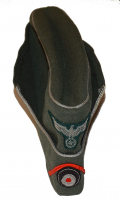
RARE GERMAN ARMY MODEL 1938 OFFICER PANZER RECONNAISSANCE FIELD CAP
Exceptional German overseas field cap with rare copper-brown piping denoting elite panzer reconnaissance (Panzer-Aufklärungs) troops. This is a private purchase example of very high quality. The… (2024-189). Learn More »
$1,500.00
ON HOLD
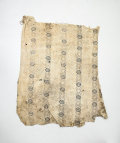
PIECE OF PRIVATE PURCHASE SOLDIER’S SHIRT FORT PEMBINA, NORTH DAKOTA
Army issue shirts had little going for them in comfort and less in style. This is a fragment of a privately purchased shirt from the excavations at Fort Pembina, ND, garrisoned from 1870 to 1895. This… (1052-606). Learn More »
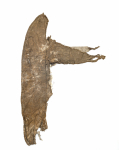
MODEL 1872 FATIGUE BLOUSE FRAGMENT: FORT PEMBINA
This appears to be the rollover collar and portion of the chest from a M1872 fatigue blouse. This was pleated nine-button blouse piped on the collar and cuff, made in lined and unlined versions, with… (1052-598). Learn More »
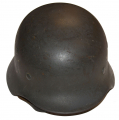
WORLD WAR TWO GERMAN DOUBLE DECAL MODEL 1940 LUFTWAFFE HELMET
Helmet is the Model 1940 with rolled edge and molded air vents. Helmet is painted a dark gray color. The left side has the Luftwaffe decal of which 98% remains with the swastika missing. The right… (1176-16). Learn More »
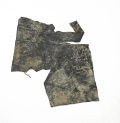
SCARCE CIVIL WAR PONCHO OR “GUM BLANKET” FRAGMENT
Civil War period ponchos and rubber blankets are extremely scarce despite being widely used and valued by troops in the field. They were so useful at home as to be used up by veterans and their… (1052-630). Learn More »
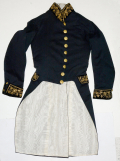
CIRCA 1835 US DIPLOMAT’S COAT
This is a colorful, elegant, and very high-grade cut-away tail coat in excellent condition with no mothing whatsoever and just one small tear under one arm. The coat is single breasted, fitted with… (622-410). Learn More »
$3,825.00
Originally $4,250.00
KEPI OR DRESS HAT STIFFENER FROM FORT PEMBINA
This leather disk seems to be the stiffener from inside the top of a hat, either a kepi or dress hat. It is circular and folded over on one side, black in color with gray and white stains, and comes… (1052-476). Learn More »
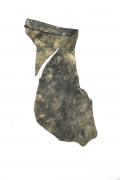
SCARCE CIVIL WAR PONCHO OR “GUM BLANKET” FRAGMENT
This scarce fragment comes from either a poncho or blanket (often referred to as “rubberized,” “gum,” or “painted” blankets.) The significant difference being the presence of slit for the… (1052-627). Learn More »
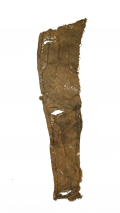
CIVIL WAR-INDIAN WAR UNIFORM COAT LAPEL FROM FORT PEMBINA
This strip of cloth shows three buttonholes indicating it is from the lapel of a coat and the spacing suggests it is from an army fatigue blouse. This comes from excavations at Fort Pembina, a small… (1052-614). Learn More »
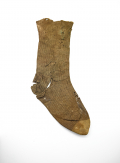
INDIAN WAR SOLDIER’S SOCK FROM FORT PEMBINA, ND
This appears to be the 1877 pattern army sock, which was medium gray in color, had white toes, and the weave of the heel running parallel with the leg and nearly at a right angle to the foot. We show… (1052-594). Learn More »
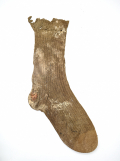
INDIAN WAR SOLDIER’S SOCK FROM FORT PEMBINA, ND
This comes from the excavations at Fort Pembina, ND, and appears to be the 1877 pattern army sock, which was medium gray in color, had white toes, and the weave of the heel running parallel with the… (1052-593). Learn More »
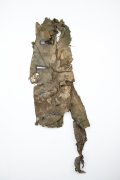
CIVIL WAR-INDIAN WAR UNIFORM COAT LAPEL FROM FORT PEMBINA
This strip of cloth with four closely spaced button holes is likely the remnant of an army dress coat discarded after its useful days were done at Fort Pembina, a small frontier garrison in North… (1052-613). Learn More »
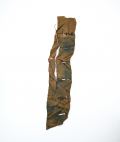
CIVIL WAR-INDIAN WAR UNIFORM LAPEL FROM FORT PEMBINA
This strip of cloth showing six buttonholes is likely the remnant of an army dress coat discarded after its useful days were done at Fort Pembina, a small frontier garrison in North Dakota, where wet,… (1052-612). Learn More »
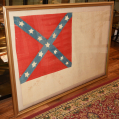
CAPTURED CONFEDERATE SECOND NATIONAL FLAG, UNUSUAL VARIATION WITH MADAUS LETTER, FROM A SOLDIER IN THE 59th NEW YORK
This 2nd National Confederate Flag was purchased in the 1980s by a well-respected Florida dealer/collector directly from descendants of the Union soldier who had kept it as a trophy. It comes with a… (1179-019). Learn More »
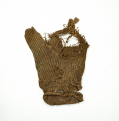
SCARCE INDIAN WAR SOLDIER’S MITTEN FROM FORT PEMBINA, ND
This comes from the excavations at Fort Pembina, occupied 1870-1895, where cold weather in winter months might well be a concern. The army began issuing mittens in 1873. Before that men were left to… (1052-585). Learn More »
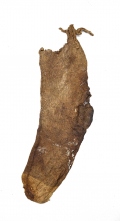
INDIAN WAR SOLDIER’S SOCK FROM FORT PEMBINA, ND
This comes from the excavations at Fort Pembina, ND, and appears to be the 1877 pattern army sock, which was medium gray in color, had white toes, and the weave of the heel running parallel with the… (1052-583). Learn More »
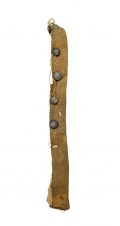
CIVIL WAR-INDIAN WAR UNIFORM COAT LAPEL FROM FORT PEMBINA
This lapel comes from a US army coat discarded by a soldier at Fort Pembina, ND, and still has five enlisted, general service eagle buttons in place. This comes from excavations in wet, anaerobic soil… (1052-565). Learn More »
SCARCE CIVIL WAR ARMY ISSUE SHOE, A.K.A. BROGAN OR BOOTTEE
This Civil War issue shoe is missing the vamp, but shows illustrates the typical construction of an issue brogan. This comes from a U.S. Army Indian War post established in 1870, a period in which the… (1052-542). Learn More »
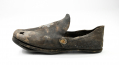
SCARCE CIVIL WAR ARMY ISSUE BROGAN ALTERED TO A BARRACKS SHOE AT FORT PEMBINA
This Civil War army-issue shoe is in very good condition though excavated and easy to take for a barn or attic find. This was recovered at Fort Pembina, ND, a US army post established in 1870, where… (1052-287). Learn More »
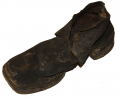
US ISSUE MODEL 1872 SHOE, MAKER MARKED, POSSIBLY BY JOHN MUNDELL OF PHILADELPHIA
This army-issue was excavated at Fort Pembina, ND, established in 1870 and in operation to 1895. It was found on private property, with the owner’s permission, and is in good condition, a result of… (1052-492). Learn More »
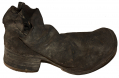
EARLY INDIAN WAR ALTERED BARRACKS OR CAMP SHOE
This is an unusual Indian War soldier’s camp or barracks shoe from Fort Pembina, ND, a small U.S. army post from 1870 to 1895. The heel portion of the quarters was cut away, either to salvage the… (1052-288). Learn More »
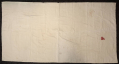
CIVIL WAR PERIOD LINEN SHEET WITH MONOGRAM
White linen sheet meas. approx. 75.50 inches wide by 82.00 inches long (it is folded in half in the photos). Sheet has finished edges with a small monogram in approx. 1.00 inch high letters that reads… (1025-01). Learn More »
$600.00
Originally $750.00
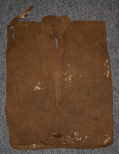
CIVIL WAR ERA WORKSHIRT/SMOCK MADE FROM ALTERED SHIRT FORT PEMBINA
This is a simple shirt altered by a soldier at a frontier US Army fort for wear as smock to shield his uniform while on a work or fatigue detail and comes from excavations at Fort Pembina, North… (1052-649). Learn More »
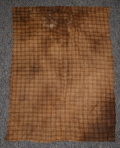
CIVIL WAR ERA WORKSHIRT/SMOCK MADE FROM ALTERED SHIRT FORT PEMBINA
This is a simple shirt altered by a soldier at a frontier US Army fort for wear as smock to shield his uniform while on a work or fatigue detail and comes from excavations at Fort Pembina, North… (1052-648). Learn More »
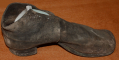
RARE MARKED CIVIL WAR ARMY ISSUE SHOE
Civil War army-issue shoes were among the most essential things issued to a soldier and about the rarest of Civil War items to survive despite being made literally in the millions. They were cheaply… (1052-286). Learn More »
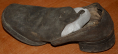
SCARCE INDIAN WAR US ARMY 1872 PATTERN SHOE ALTERED TO CAMP OR BARRACKS SHOE
New pattern shoes and boots were introduced in the U.S. Army in 1872 and in use until the 1880s with a minor change in 1876 to a longer tongue. These shoes improved upon Civil War issue patterns… (1052-286). Learn More »
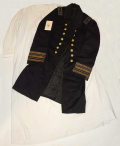
CIVIL WAR COMMODORE’S UNDRESS FROCK COAT OF SILAS H. STRINGHAM, USN: LEADER OF THE FIRST COMBINED OPERATION OF THE UNION NAVY AND ARMY IN THE CIVIL WAR; VICTOR OF THE BATTLE OF HATTERAS INLET BATTERIES
Fought on Aug. 28-29, 1861, little more than a month after the Union defeat at Bull Run, the capture of Forts Hatteras and Clark on the outer banks helped restrict Confederate blockade running,… (1179-504). Learn More »
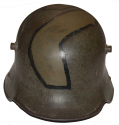
GERMAN WORLD WAR ONE MODEL 1917 HELMET WITH CAMMO PAINT
Helmet is in fair to good condition. Exterior is painted a dark apple green with four camouflage panels that have heavy black borders as is commonly seen. There are some minor areas of light pitting… (2023-3054). Learn More »
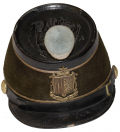
VERY NICE PATTERN 1872 SHAKO WITH MASSACHUSETTS BUTTONS & BOSTON MAKER’S LABEL
Shako is made with a black felt body with a leather crown and base. The black felt body is in very nice condition. Color has faded a bit from black to black with a greenish tint. The leather crown has… (410-503). Learn More »
$595.00
Originally $750.00
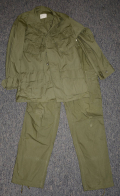
SET OF VIETNAM JUNGLE FATIGUES DATED 1967 & 1971
Coat is made of a green “rip-stop” material with slanted breast pockets and flaps that button down. The flap buttons are not exposed but are covered. There are five green buttons down the front.… (772-92A). Learn More »
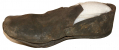
SCARCE CIVIL WAR ISSUE SHOE ALTERED TO CAMP/BARRACKS SHOE
The army did not issue “post,” “barracks,” or “camp” shoes until the 1880s. Before that it was up to soldiers to privately purchase or improvise footwear that might prove more comfortable… (1052-426). Learn More »
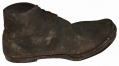
SCARCE INDIAN WAR US ARMY 1872 PATTERN SHOE WITH FIELD REPAIR
New pattern shoes and boots were introduced in the U.S. Army in 1872 and in use until the 1880s. These shoes improved upon Civil War issue patterns mainly by using brass screws in the soles, rather… (1052-576). Learn More »
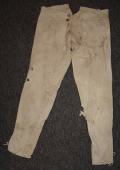
VERY RARE CIVIL WAR U.S. ARMY ISSUE DRAWERS
Civil War army-issue undergarments are extremely rare. They were made and issued in huge numbers, but were characteristically cheaply made, often disliked, and hardly worth preservation as a cherished… (1052-255). Learn More »
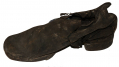
“FORTY MILES A DAY ON BEANS AND HAY IN THE REGULAR ARMY-O” SCARCE INDIAN WAR US ARMY 1872 PATTERN SHOE FROM FORT PEMBINA, N.D.
New pattern shoes and boots were introduced in the U.S. Army in 1872 and in use until the 1880s. These shoes were similar to Civil War issue patterns, with square toe, rough-side out black leather… (1052-292). Learn More »
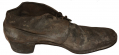
EARLY BARRACKS OR CAMP SHOE BY JOHN MUNDELL OF PHILADELPHIA
This is a usual soldier’s shoe from Fort Pembina, ND, a small U.S. army post from 1870 to 1895, and is typical army construction using rough-side out black leather and is clearly stamped “J.… (1052-388). Learn More »
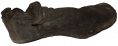
SCARCE INDIAN WAR US ARMY 1872/76 PATTERN CAVALRY BOOT FROM FORT PEMBINA, N.D.
This scarce Indian War U.S. cavalry boot actually comes from Fort Pembina, a small U.S. Army frontier fort in North Dakota in operation from 1870 to 1895. The army introduced new shoe and boot… (1052-304). Learn More »
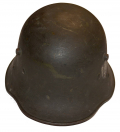
SINGLE DECAL AUSTRIAN MODEL 1916 TRANSITIONAL HELMET FOR USE IN WORLD WAR TWO
This helmet began life as an “apple green” Model 1916 helmet. Then, under the Nazis it was painted field gray, had a new liner and chinstrap added and a single army eagle decal attached to the… (2023-2359). Learn More »
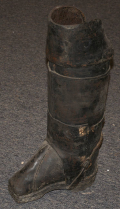
RARE POSTILION BOOT WITH SPUR
A postilion was a man who rode one of a pair of horses that pulled a coach or artillery piece. It could be very dangerous if a leg became caught between the two horses, so each postilion wore one boot… (1032-176). Learn More »
$1,200.00
Originally $1,500.00
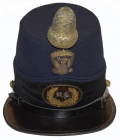
HIGH QUALITY REPRODUCTION MODEL 1855 GENERAL OFFICERS SHAKO WITH ORIGINAL PERIOD INSIGNIA
Shako has a high pasteboard body covered in dark blue wool at the top with a band of black wool around the base of the crown. The shako body stands 7.25 inches high with a disk in the crown that meas.… (2023-280). Learn More »
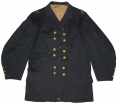
UNION CAVALRY GENERAL WILLIAM WELLS’ FIELD BLOUSE: MEDAL OF HONOR FOR GETTYSBURG WHERE HE RODE IN THE LEAD OF FARNSWORTH’S CHARGE; BRIGADE COMMANDER UNDER CUSTER; BLOUSE ACTUALLY WORN IN ONE OF HIS PHOTOS
This coat is the epitome of a Civil War Union general’s field uniform, a blouse following the popular sack coat pattern of the period, looking somewhat like an enlisted man’s fatigue blouse and… (1179-281). Learn More »
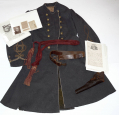
MISSOURI CONFEDERATE FROCK COAT, SASH, CS SWORD BELT, AND HOLSTER, OF MAJOR WILLIAM F. HAINES, WITH FAMILY ARCHIVE OF PHOTOS & PAPERS: SHILOH, VICKSBURG, AND NEGOTIATIONS WITH SHERMAN FOR SURRENDER OF GEN. L.S. BAKER’S COMMAND IN APRIL 1865
This beautiful, identified Confederate major’s coat, sash, sword belt, sash, and holster, once in the Texas Civil War Museum, comes with two brown ink notes that were pinned to it, one reading:… (1179-277). Learn More »
$75,000.00
ON HOLD
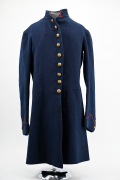
VERY NICE BOYLAN CONTRACT MARKED CIVIL WAR HEAVY ARTILLERY ENLISTED MAN’S FROCK COAT: THESE REGIMENTS WERE CALLED INTO THE FIELD AS INFANTRY FOR GRANT’S 1864 OVERLAND CAMPAIGN AGAINST RICHMOND AND PETERSBURG
This Civil War U.S. regulation enlisted man’s frock coat for heavy (or “foot”) artillery is in very good condition, with strong color to the body and piping, and is nicely marked in the upper… (172-5915). Learn More »
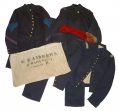
FANTASTIC UNIFORM GROUPING OF G.E. ANDREWS: OFFICER’S FROCK COAT, OFFICER’S SHORT JACKET, OFFICER’S TROUSERS, AND HIS TAILOR-MADE FIRST SERGEANT FROCK COAT WITH VETERAN SERVICE STRIPES!
We don’t often use exclamation points in a description, but this identified uniform grouping, formerly in the collections of the Texas Civil War Museum, has not just historical interest, but… (1179-147). Learn More »
$24,000.00
ON HOLD
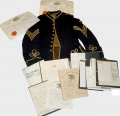
RARE IDENTIFIED 65th NY SERGEANT’S JACKET, WITH MANSCRIPT MATERIAL: 1st U.S. CHASSEURS
This is an extremely rare, early-war uniform jacket, with related material, belonging to a sergeant of the 65th New York, who enlisted at the beginning of the war as the regiment’s commissary… (1179-233). Learn More »
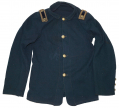
6th MICHIGAN CAVALRY ID’D CAPTAIN’S FATIGUE BLOUSE: CAPT. WILLIAM HYSER, MICHIGAN CAVALRY BRIGADE
Formerly in the collections of the Texas Civil War Museum, this wonderful Civil War officer’s fatigue coat belonged to Captain William Hyser, who served twice as a Captain in the 6th Michigan… (1179-170). Learn More »
$15,000.00
ON HOLD
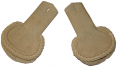
PAIR OF REGULATION 1851 BUFF EPAULETTES - HORSTMAN MARKED
These buff cloth epaulettes are in very good condition with only light surface dirt from age and storage throughout. There is no damage of any kind. The body of each is covered in a buff colored cloth… (37-386). Learn More »
$350.00
Originally $550.00
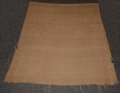
CONFEDERATE BLANKET BROUGHT HOME BY 4TH WEST VIRGINIA CAVALRY TROOPER, WITH TROOPER’S DISCHARGE & TWO PHOTOS OF HIM AS AN OLDER MAN
Blanket is made of a thin coarse butternut brown wool with faded red end stripes along both edges and ends. The red stripes are formed by eight parallel rows of red stitching. Taken together the eight… (1179-163). Learn More »
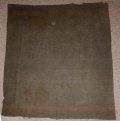
CIVIL WAR BLANKET ISSUED BY THE STATE OF MASSACHUSETTS TO ITS TROOPS
Blanket is made of a dark brown wool with red end stripes approx. 2.50 inches wide. Overall length is 77 inches with a width of 64 inches. The condition of the blanket is excellent. There does not… (1179-167). Learn More »
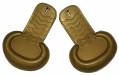
UNITED STATES MARINE CORPS SHOULDER SCALES
These are stamped brass style of shoulder scales. Similar in appearance to the enlisted style. No turnbuckles or fringe. Includes separate piece on underside to attach hanging fringe. The brass… (490-2933). Learn More »
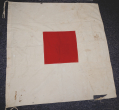
“FOUR-FOOT WHITE” CIVIL WAR SIGNAL FLAG WITH A POST-WAR ID
This is a good example of the “Four-foot White” signal flag that, along with the “Four-foot Red,” was the most commonly used flag in the Civil War signal kit. Both are described in Brown’s… (169-575). Learn More »
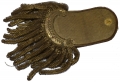
CIRCA 1820’S SINGLE GOLD BULLION EPAULETTE
Oblong shaped epaulette with a body covered in heavy woven gold bullion cloth outlined with two rows of gold dead bullion. One edge is covered in gold sequins arranged in three rows with inverted… (410-544). Learn More »
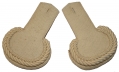
PAIR OF REGULATION 1851 BUFF EPAULETTES - HORSTMANN MARKED
These buff cloth epaulettes are in very good condition with only light surface dirt from age and storage throughout. There is no damage of any kind. The body of each is covered in a buff colored cloth… (410-546). Learn More »
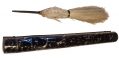
PRE- CIVIL WAR SHAKO HAT PLUME IN TIN CANISTER
Shako plume has remained in very good condition from being stored in this japanned tin canister. Both ends have hinged lids that fully function. Brass band is around plume. Plume measures 13" long.… (179-928). Learn More »
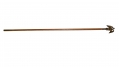
UPPER FLAG POLE SECTION ATTRIBUTED TO A ‘BLACK GAR POST IN PITTSBURGH’
This is the top portion only of a two piece wooden flag pole. During the Civil War most regimental colors were mounted on a two piece pole like this one. The sections were mated together by a threaded… (M23251). Learn More »
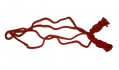
ORIGINAL, UNISSUED CIVIL WAR ARTILLERY HAT CORD
This is the red worsted wool artillery hat cord for use on the Model 1858 dress hat also known as the Hardee Hat. Very nice in unused, unissued condition. One small area of fraying, approx. 1/4" in… (ST500192). Learn More »
Showing 1 to 229 out of 229
Most Popular
Historical Firearms Stolen From The National Civil War Museum In Harrisburg, Pa »
Theft From Gravesite Of Gen. John Reynolds »
Selection Of Unframed Prints By Don Troiani »
Fine Condition Brass Infantry Bugle Insignia »
featured item
RARE ID’D FIELD PRESENTATION BUGLE JACOB KECK - 7TH NEW YORK, 9TH NYSM (83RD NY), 97TH NEW YORK
This handsome instrument is in exquisite condition and is professionally inscribed in cursive with the words, “Presented to / J. F. Keck, / By the Members of the / 9th N.Y.S.M / in the Field. / March 1864”. Very rarely were bugles or such musical… (2024-1443). Learn More »
site search